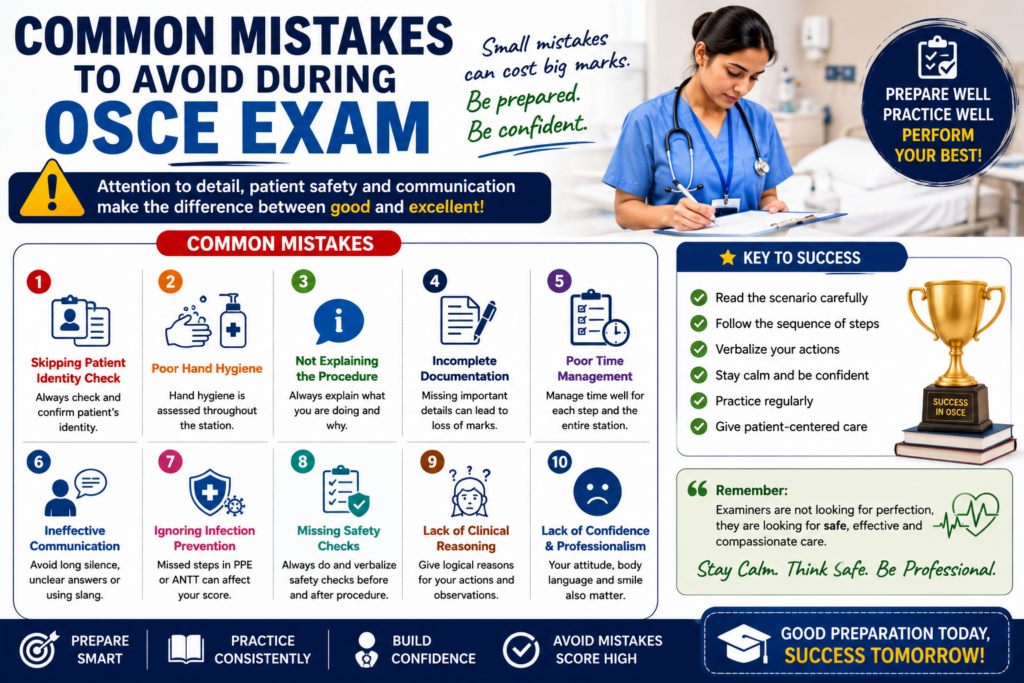


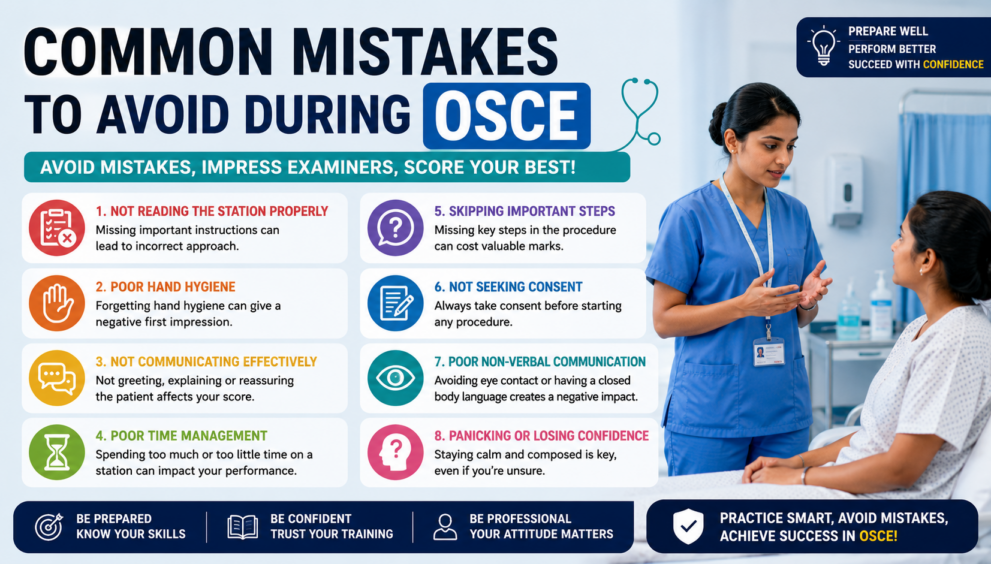
The Objective Structured Clinical Examination (OSCE) is designed to assess a healthcare student’s ability to apply clinical knowledge in real-life scenarios. While many students prepare thoroughly by studying procedures and practicing skills, small mistakes during the examination can significantly impact their overall score. Being aware of these common errors can help you perform with greater confidence and professionalism.
1. Skipping Hand Hygiene (most important)
One of the most frequent mistakes in an OSCE is forgetting to perform hand hygiene before and after patient contact. Examiners pay close attention to infection prevention practices, and neglecting this simple step can lead to unnecessary marks being deducted.
Tip: Make hand hygiene your first and last action at every clinical station.
2. Failing to Introduce Yourself
Students often become so focused on the procedure that they forget to introduce themselves to the patient. A proper introduction helps establish trust and demonstrates professionalism.
Tip: Begin every station by greeting the patient, introducing yourself, confirming their identity, and explaining your role.
3. Not Obtaining Patient Consent
Performing an examination or procedure without asking for consent is a common but serious mistake. Consent reflects respect for patient autonomy and is an essential part of ethical healthcare practice.
Tip: Clearly explain the procedure and ask for the patient’s permission before proceeding.
4. Poor Communication
Clinical knowledge alone is not enough. Using complex medical terminology, failing to listen, or not maintaining eye contact can affect your communication score.
Tip: Speak clearly, use simple language, actively listen to the patient, and show empathy throughout the interaction.
5. Ignoring Patient Comfort and Privacy
Many students focus entirely on completing the task and overlook the patient’s comfort. Forgetting to provide privacy, expose only the necessary body part, or check if the patient is comfortable can affect your professionalism marks.
Tip: Always maintain dignity, privacy, and patient comfort during every procedure.
6. Missing Important Steps in a Procedure
Rushing through a clinical skill often leads to skipped steps, such as checking patient allergies, verifying medications, or confirming equipment readiness.
Tip: Practice using standardized OSCE checklists until every step becomes second nature.
7. Poor Time Management
Each OSCE station has a strict time limit. Spending too much time on one section may prevent you from completing the assessment.
Tip: Practice under timed conditions and learn to prioritize the most important tasks.
8. Forgetting to Verbalize Actions
Sometimes students know what they should do but fail to say it aloud if equipment is unavailable or the action cannot be physically demonstrated.
Tip: Clearly state any clinical action you would normally perform, such as checking allergies or documenting findings.
9. Inaccurate Documentation
Incomplete or incorrect documentation is a common reason for losing marks. Clinical records should be clear, accurate, and professional.
Tip: Record observations promptly using appropriate medical terminology and standard documentation practices.
10. Letting Anxiety Affect Performance
Even well-prepared students may make avoidable mistakes due to nervousness. Anxiety can lead to forgetting key steps or rushing through the station.
Tip: Take a deep breath before entering each station, stay calm, and focus on one task at a time.
Final Thoughts
Success in an OSCE is not just about mastering clinical procedures—it is also about demonstrating professionalism, effective communication, patient-centered care, and safe clinical practice. By recognizing and avoiding these common mistakes, you can improve your confidence, maximize your score, and showcase your readiness for real-world healthcare settings.
Remember, consistent practice, constructive feedback, and attention to detail are the keys to OSCE success. Every mock examination is an opportunity to refine your skills and become a more competent healthcare professional.