


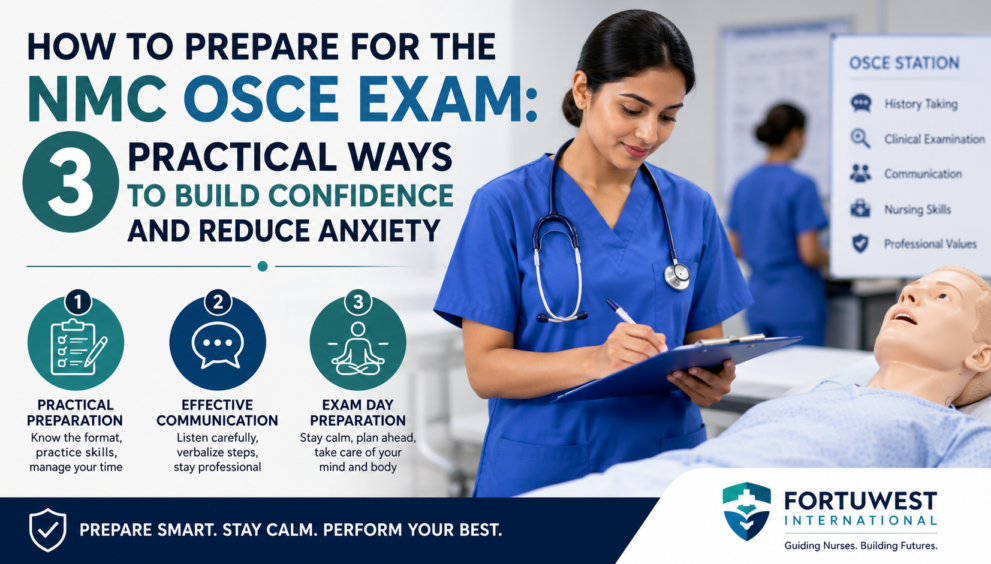
NMC OSCE Exam Preparation: Build Confidence and Overcome Exam Anxiety
Preparing for the NMC Objective Structured Clinical Examination (OSCE) can feel overwhelming, especially if you’re taking it for the first time. Many internationally educated nurses experience anxiety before the exam, but with the right preparation, effective communication, and good self-care, you can approach the OSCE with confidence.
This guide outlines three practical strategies to help you reduce exam anxiety and perform at your best.
1. Strengthen Your Practical Preparation
Thorough preparation is the best way to reduce stress and improve confidence.
Understand the OSCE Format
Become familiar with the structure of the examination and the different types of stations you may encounter.
These typically include:
- APIE Stations – Assessment, Planning, Implementation, and Evaluation
- Skills Stations – Practical nursing procedures
- Evidence-Based Practice (EBP) & Professional Values (PV) – Silent written stations assessing clinical reasoning and professional judgment
Knowing what to expect allows you to focus on demonstrating safe nursing practice rather than worrying about surprises during the exam.
Practice According to the Marking Criteria
Practice each station using the official assessment criteria.
To improve your performance:
- Record yourself performing clinical skills.
- Review your recordings to identify areas for improvement.
- Repeat each station until every step becomes natural.
- Role-play with colleagues or mentors using realistic patient scenarios.
Consistent practice builds muscle memory and helps you remain calm under exam conditions.
Learn from Feedback
Constructive feedback is one of the fastest ways to improve.
Practice with experienced mentors or colleagues who can identify strengths and areas needing improvement.
After every practice session:
- Reflect on your performance.
- Correct mistakes immediately.
- Focus on continuous improvement rather than perfection.
Practice Time Management
Each station has a limited amount of time.
Prepare by:
- Using a timer during practice.
- Completing each skill within the allocated time.
- Learning to prioritize essential actions.
Focus only on the current station rather than worrying about previous or upcoming stations.
Remember that station order may vary, so avoid expecting APIE stations to appear first.
2. Improve Your Communication Skills
Communication plays a major role in OSCE success.
Listen Carefully
Pay close attention while the examiner introduces the station. Missing important instructions can affect your performance.
If anything is unclear, politely ask the examiner for clarification before beginning.
Read Instructions Thoroughly
Before starting:
- Read every instruction carefully.
- Identify exactly what is expected.
- Confirm whether patient consent has already been obtained.
If consent has not been given, obtain it before performing the procedure.
Check Your Equipment
Before beginning any clinical skill:
- Ensure all equipment is available.
- Confirm everything is functioning correctly.
- Organize your workspace to avoid unnecessary delays.
Verbalize Your Actions
Explain each step as you perform it.
This demonstrates your clinical reasoning and reassures the examiner that you understand safe nursing practice.
Maintain professional communication with both the patient and examiner throughout every station.
3. Prepare Yourself for Exam Day
A calm and well-prepared mindset can significantly improve your performance.
Arrive Early
Plan your journey in advance and arrive at the examination centre early.
This allows time to settle your nerves and become familiar with the environment.
Wear Appropriate Uniform
Wear a professional uniform that meets OSCE requirements.
Acceptable attire includes:
- Nursing tunic or scrub suit
- Black trousers
- Completely black work shoes
If your uniform contains a visible logo, cover it with plain white tape.
Speak with Mentors and Peers
Connecting with nurses who have already completed the OSCE can provide reassurance and practical advice.
Their experiences may help reduce uncertainty and boost your confidence.
Prioritize Self-Care
Your physical and mental wellbeing directly affect your exam performance.
Before the exam:
- Get sufficient sleep.
- Eat a balanced meal.
- Stay hydrated.
- Practice relaxation techniques such as deep breathing or visualization.
Taking care of yourself helps improve concentration and reduces anxiety during the examination.
Final Thoughts
Feeling nervous before the NMC OSCE is completely normal. The key to overcoming anxiety is consistent preparation, regular practice, effective communication, and maintaining a positive mindset.
By understanding the exam format, practicing clinical skills, managing your time effectively, and taking care of your wellbeing, you can confidently demonstrate your nursing knowledge and skills.
At Fortuwest International, we are committed to supporting internationally educated nurses throughout their UK registration journey. From OSCE preparation and mock sessions to expert guidance and training, our team is here to help you succeed with confidence.
Take the next step toward your UK nursing career with Fortuwest International and prepare for your OSCE with the support of experienced professionals.