

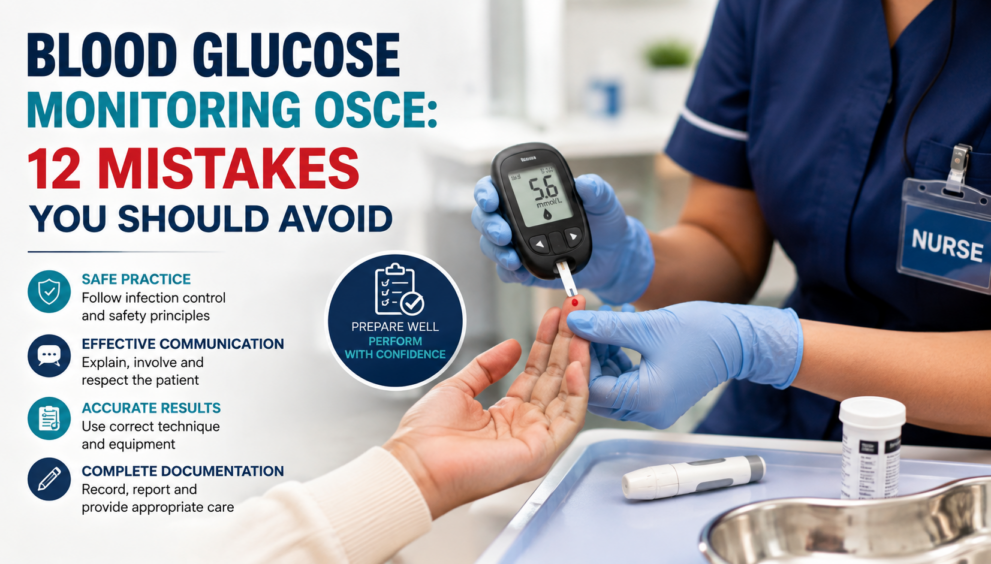
Blood glucose monitoring is a commonly practised clinical skill in the NMC OSCE. Success is not just about obtaining a reading—it is also about demonstrating safe practice, effective communication, infection prevention and accurate documentation.
Here are 12 common mistakes candidates should avoid.
1. Rushing Hand Hygiene
Do not allow exam pressure to affect your infection-prevention practice. Perform effective hand hygiene at the appropriate points during the procedure and follow the principles expected in the OSCE.
2. Missing Important Pre-Checks
Read the scenario carefully before starting. Understand the clinical situation, check the relevant documentation and prepare yourself for the specific requirements of the station.
3. Forgetting to Explain and Gain Consent
Always introduce yourself, explain the procedure in a clear and understandable way, and obtain the patient’s consent before proceeding. Good communication should continue throughout the station.
4. Not Checking Your Equipment
Before taking the blood glucose reading, check that your equipment is suitable for use. This may include checking the integrity of the equipment and ensuring test strips are appropriate and within their expiry date.
5. Choosing an Inappropriate Puncture Site
Assess the patient’s finger before proceeding. Follow safe clinical practice when selecting the puncture site and use an appropriate area of the fingertip.
6. Poor Lancet Technique
Use the lancet safely and confidently according to the equipment and procedure provided. Avoid unnecessary delays and ensure patient comfort is considered.
7. Obtaining an Inadequate Blood Sample
Ensure that an adequate sample is obtained according to the manufacturer’s instructions for the glucose meter and test strip. An insufficient sample may affect the accuracy of the reading.
8. Contaminating the Sample
Take care to prevent contamination. Handle the equipment correctly and follow infection-prevention principles throughout the procedure.
9. Incorrect Sharps Disposal
A used lancet must be disposed of safely and immediately in the appropriate sharps container. Never leave used sharps on the tray or clinical area.
10. Ignoring the Result
Once the reading is available, recognise whether further action may be required according to the scenario, local policy and the patient’s clinical condition. Communicate appropriately and provide relevant information to the patient.
11. Forgetting Post-Procedure Care
Do not end the station immediately after obtaining the reading. Ensure the patient is comfortable, offer appropriate care to the puncture site and leave the clinical area safe and tidy.
12. Incomplete Documentation
Accurate documentation is an essential part of safe nursing practice. Record the blood glucose result clearly, along with the required date, time and signature, using the correct documentation provided in the station.
Final Tip
The key to performing well is to avoid rote learning. Focus on understanding the principles behind each step and demonstrate how a safe, competent and compassionate nurse would approach the patient.
The NMC continues to review and update OSCE preparation materials to reflect contemporary clinical practice, so candidates should always prepare using the latest official resources. The current NMC supporting documents also include specific documentation for blood glucose monitoring.
For the latest official requirements, candidates can review the NMC OSCE preparation materials.