


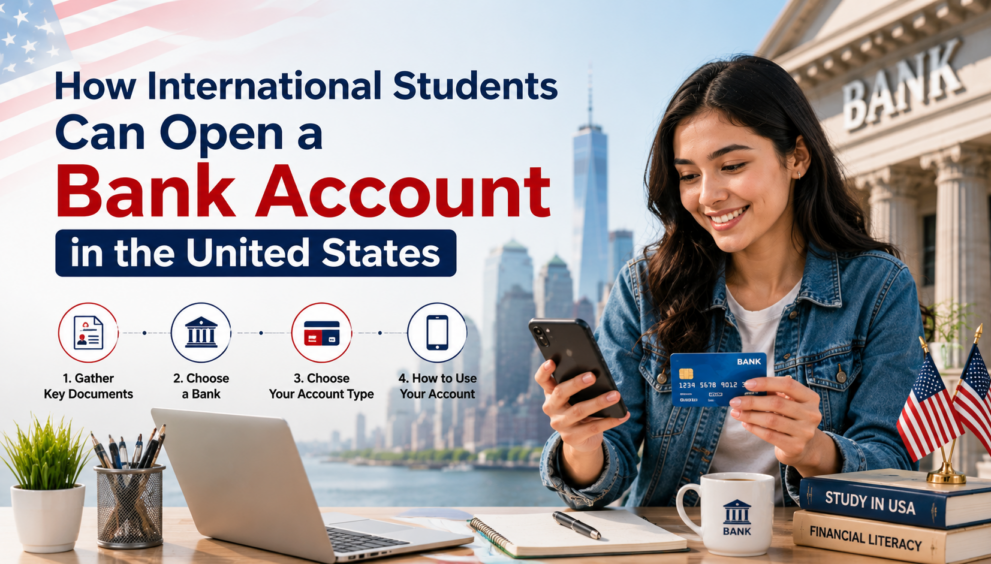
Moving to the United States for your studies involves more than choosing a university and finding accommodation. Managing your money is also an important part of settling into your new life.
For many international students, continuing to use a bank account from their home country can result in foreign transaction charges, currency conversion costs, and ATM fees. Opening a local US bank account can make it easier to manage everyday expenses, pay bills, receive money, and keep track of your finances while studying.
In this guide, we’ll explore the main steps international students can take to open and use a bank account in the United States.
Step 1: Gather the Required Documents
Before visiting a bank or starting an application, make sure you have the documents required to verify your identity and address.
Requirements can vary between financial institutions, but international students may be asked to provide the following:
- A valid passport or other primary identification
- Proof of your permanent address outside the United States
- Proof of your current US address
- A student identification card, driver’s licence, or another form of secondary identification
- A Tax Identification Number or Foreign Tax Identification Number, if applicable
Proof of Your US Address
Depending on the bank, proof of your physical address in the United States may include:
- A rental or lease agreement
- A utility bill
- An official document showing your residential address
- An eligible student or government-issued ID
If you have recently arrived and do not yet have all the required documents, contact the bank directly to ask what alternatives they accept.
It is always a good idea to check the institution’s official requirements before visiting a branch, as document requirements can differ from one bank to another.
Step 2: Choose the Right Financial Institution
International students have several options when choosing where to open an account. The right choice depends on factors such as fees, branch locations, online banking services, ATM access, and eligibility requirements.
Traditional Retail Banks
Large retail banks can offer physical branches, ATM networks, debit cards, mobile apps, and online banking services.
A traditional bank may be a useful option if you prefer being able to visit a branch and speak with a representative in person.
Online Banks
Some students may prefer online-focused banking services. These institutions can provide convenient digital account management through websites and mobile applications.
However, students should carefully check whether an online bank accepts their visa status and whether it provides the services they need.
Credit Unions
Credit unions are member-owned financial institutions that may offer competitive fees and interest rates.
Some credit unions have specific membership requirements, so international students should confirm whether they are eligible before applying.
What Should You Compare Before Choosing a Bank?
Before opening an account, take time to compare different options.
Important things to consider include:
- Monthly account maintenance fees
- Minimum balance requirements
- ATM access and withdrawal fees
- International transfer options
- Mobile and online banking features
- Debit card availability
- Branch locations
- Student account benefits
- Eligibility requirements for international students
Some financial institutions offer accounts or promotions designed specifically for students. These options may provide lower fees or other benefits, but students should always read the terms and conditions carefully.
Step 3: Choose Your Account Type
The next step is deciding which type of account best suits your needs.
Two common types of bank accounts are checking accounts and savings accounts.
Checking Account
A checking account is generally designed for everyday money management.
Students may use a checking account to:
- Deposit money
- Receive payments
- Make purchases using a debit card
- Withdraw cash from an ATM
- Pay bills
- Transfer money
- Manage everyday expenses
For many international students, a checking account is the most practical account for daily use.
Savings Account
A savings account is designed to help customers set money aside.
Depending on the institution and account terms, a savings account may offer interest on the money held in the account. However, withdrawal rules and other conditions may apply.
Some students choose to have both a checking account for everyday expenses and a savings account for money they do not plan to spend immediately.
Before opening an account, make sure you understand any fees, minimum balance requirements, withdrawal rules, and eligibility conditions.
Step 4: Set Up and Use Your Bank Account
After your application is approved, you may receive a debit card that can be used for purchases and ATM withdrawals.
You may also be asked to create a Personal Identification Number, commonly known as a PIN.
Your PIN helps protect access to your account, so it is important to keep it private and choose a number that is difficult for others to guess.
Avoid sharing your PIN with anyone, and do not use obvious personal information as your security code.
Using Online and Mobile Banking
Many banks offer online and mobile banking services, allowing students to manage their money without visiting a physical branch.
Depending on the services provided by your financial institution, online banking may allow you to:
- Check your account balance
- Review transactions
- Transfer money between accounts
- Pay bills
- Receive account notifications
- Access bank statements
- Set up automatic payments
- Create automatic savings transfers
Digital banking can be particularly convenient for busy students who need to manage their finances around classes and other responsibilities.
Stay Safe When Banking Online
Online banking is convenient, but students should take basic steps to protect their accounts and personal information.
Some useful precautions include:
- Use secure and trusted internet connections
- Avoid entering sensitive banking information on public or unsecured Wi-Fi networks
- Keep your passwords private
- Use strong and unique passwords
- Enable available security features, such as multi-factor authentication
- Log out after using shared or public devices
- Regularly check your account for unexpected transactions
If you notice an unfamiliar transaction or believe your account information has been compromised, contact your bank immediately through its official customer service channels.
Understanding Fees and Charges
Before opening an account, make sure you understand the possible charges.
Depending on the bank and account type, you may encounter fees for:
- Monthly account maintenance
- Using certain ATMs
- International transfers
- Foreign currency transactions
- Overdrafts or insufficient funds
- Additional banking services
Some accounts may waive certain fees if you meet specific requirements, such as maintaining a minimum balance or qualifying for a student account.
Reading the account terms carefully can help you avoid unexpected costs.
Can International Students Open a US Bank Account?
Eligibility and requirements can vary between financial institutions. Some banks may have specific account options for international students, while others may require additional identification or documentation.
Your visa status, identification documents, address, and tax information may also affect the application process.
For this reason, it is best to contact your preferred financial institution or visit its official website before applying.
Tips for Managing Your Money as an International Student
Opening a bank account is only the first step. Good financial habits can make student life easier.
Here are a few useful tips:
Create a Monthly Budget
List your regular expenses, including:
- Rent
- Food
- Transportation
- Phone bills
- Utilities
- Study materials
- Personal expenses
A budget can help you understand where your money is going and avoid unnecessary spending.
Keep Track of Your Account Balance
Check your balance and recent transactions regularly to help avoid overspending and unexpected charges.
Build an Emergency Fund
If possible, keep some money aside for unexpected expenses such as travel changes, repairs, or other urgent needs.
Understand International Transfers
If you expect to receive money from your home country, compare available transfer options and check the associated fees and exchange rates.
Final Thoughts
Opening a US bank account can make everyday financial management much easier for international students. From paying rent and buying groceries to managing online payments and tracking expenses, having a local account can simplify many aspects of student life.
The process may vary depending on the financial institution, so it is important to research your options, prepare the required documents, compare account features, and understand any fees before making a decision.
With the right account and good money-management habits, international students can feel more confident about handling their finances while focusing on their academic journey in the United States.