


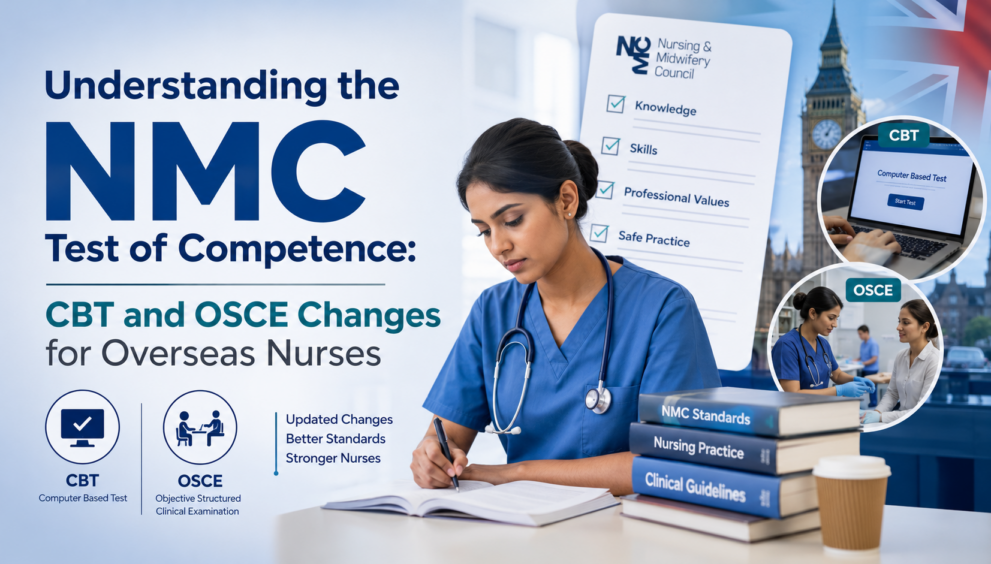
For overseas-qualified nurses planning to build their nursing career in the United Kingdom, understanding the Nursing and Midwifery Council (NMC) Test of Competence is an important part of the registration journey.
The Test of Competence was updated to better reflect contemporary nursing practice and support a fair and effective assessment process for internationally educated nurses and midwives. The assessment process includes two key components: the Computer Based Test (CBT) and the Objective Structured Clinical Examination (OSCE).
This guide explains the major changes introduced to the competency testing structure and what overseas-qualified nurses need to understand about the CBT and OSCE pathways.
Why Was the Test of Competence Updated?
The NMC introduced changes to its Test of Competence as part of an ongoing effort to ensure that candidates are assessed against the standards expected in modern UK nursing and midwifery practice.
The updated assessment model was designed to evaluate not only theoretical knowledge but also important areas such as:
- Clinical decision-making
- Numeracy skills
- Professional values
- Evidence-based practice
- Practical nursing and midwifery skills
- Safe and effective patient care
For overseas-qualified nurses, these assessments form an essential part of demonstrating readiness to practise within the UK healthcare system.
Understanding the CBT Structure
The Computer Based Test, commonly known as the CBT, is an important stage in the NMC registration process for many internationally educated nursing professionals.
The revised CBT structure was divided into two main sections.
Part A: Numeracy
Part A focuses on numeracy and assesses a candidate’s ability to apply numerical skills relevant to nursing practice.
The assessment includes:
- 15 marks
- 30 minutes duration
Numeracy is an important area of nursing practice because healthcare professionals must be able to work accurately with calculations and numerical information.
Part B: Clinical Questions
Part B focuses on clinical knowledge and professional understanding.
The section includes:
- 100 marks
- 2 hours and 30 minutes duration
This part assesses the candidate’s understanding of areas relevant to professional nursing practice.
Together, the two sections provide a broader assessment of the knowledge and skills expected from nurses seeking registration.
CBT Fee Structure
The revised fee structure introduced different fees depending on whether candidates were taking the complete CBT or retaking an individual section.
According to the information provided:
| CBT Assessment | Fee |
|---|---|
| Both Part A and Part B | £83 |
| Retake of Part A | £50 |
| Retake of Part B | £70 |
Candidates should always check the latest official NMC and Pearson VUE information before making a booking, as examination fees and procedures may change over time.
Major Changes to the NMC OSCE
The Objective Structured Clinical Examination (OSCE) assesses a candidate’s practical ability to apply nursing knowledge and skills in a simulated clinical environment.
One of the significant changes in the updated Test of Competence was the expansion of the OSCE structure.
Previous OSCE Format
The earlier format consisted of six stations, including:
- Four APIE stations
- Two clinical skills stations
APIE refers to the nursing process:
- A – Assessment
- P – Planning
- I – Implementation
- E – Evaluation
Updated OSCE Format
The revised OSCE structure consists of 10 stations.
These include:
Four APIE Stations
Candidates are assessed on their ability to follow the nursing process, from assessing a patient’s needs to planning, implementing and evaluating appropriate care.
Clinical Skills Stations
The OSCE also includes pairs of clinical skills stations designed to assess practical competence.
Professional Values Station
Professional values became an important addition to the assessment structure. This area focuses on the professional responsibilities and standards expected from nurses.
Evidence-Based Practice Station
The evidence-based practice station assesses a candidate’s ability to understand and apply evidence appropriately within nursing care.
The total duration of the revised OSCE was 2 hours and 45 minutes.
OSCE Updates for Midwives
The updated midwifery OSCE follows a structure similar to the adult nursing Test of Competence.
The assessment includes:
- Four APIE stations
- Two pairs of clinical skills stations
- A professional values component
- An evidence-based practice component
For midwifery candidates, one of the linked skills may involve areas such as the systematic examination of the newborn and postnatal assessment.
The overall assessment duration is approximately 2 hours and 45 minutes.
What Do These Changes Mean for Overseas Nurses?
The revised Test of Competence places greater emphasis on a combination of knowledge, practical competence and professional judgement.
For overseas-qualified nurses, effective preparation should therefore go beyond simply memorising questions. Candidates should develop confidence in:
- Applying clinical knowledge to realistic situations
- Understanding the NMC professional standards
- Completing numeracy calculations accurately
- Demonstrating safe clinical practice
- Following the APIE framework
- Understanding professional values
- Applying evidence-based principles to patient care
- Managing time effectively during examinations
A structured preparation strategy can help candidates become more familiar with the assessment format and identify areas that require additional practice.
How to Prepare for the CBT and OSCE
Preparing for the NMC Test of Competence requires consistency and a clear understanding of the examination structure.
Here are some useful preparation strategies:
1. Understand the Exam Format
Before beginning intensive preparation, make sure you understand the different components of the CBT and OSCE.
Knowing what to expect can help you organise your study time more effectively.
2. Strengthen Your Numeracy Skills
For CBT Part A, regular practice can help improve speed and accuracy when dealing with nursing-related calculations.
3. Revise Clinical Knowledge
CBT preparation should include a systematic review of the key areas of nursing knowledge and professional practice relevant to the assessment.
4. Practise the APIE Approach
OSCE candidates should become comfortable with the structure of:
Assessment → Planning → Implementation → Evaluation
Understanding how each stage connects to the next can support a more organised approach during the examination.
5. Focus on Professional Values
Professional communication, patient-centred care, confidentiality, safety and accountability are essential areas of nursing practice.
Candidates should understand how professional values influence decisions made in clinical situations.
6. Develop Time-Management Skills
Both the CBT and OSCE involve time limits. Regular practice under timed conditions can help candidates become more confident and organised.
Start Your UK Nursing Journey with the Right Guidance
The NMC registration journey can involve several important stages, including eligibility requirements, English language evidence where applicable, the CBT, OSCE preparation and other registration procedures.
Because requirements and examination processes can change, overseas nurses should always refer to the latest official guidance before making important decisions or booking an examination.
However, having the right career guidance and understanding the overall process can make the journey easier to navigate.
Looking for Career Guidance?
If you are an overseas-qualified nurse exploring nursing opportunities and career pathways, Fortu West International can provide career guidance and support to help you better understand your next steps.
Disclaimer: Examination formats, fees, booking procedures and NMC registration requirements may be updated. Always check the latest official guidance before taking action or booking an examination.