


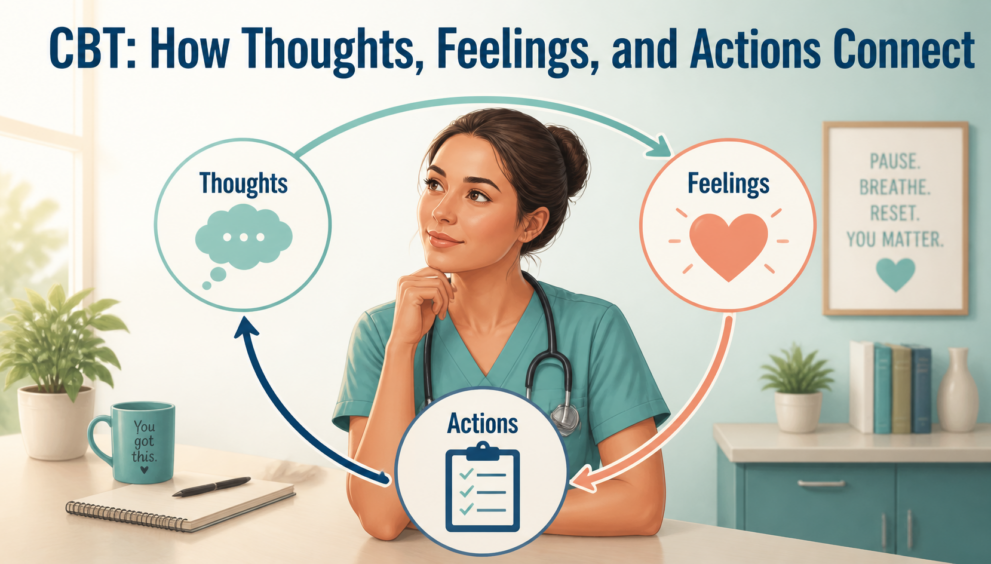
Cognitive Behavioural Therapy (CBT) is a structured talking therapy that helps people notice how their thoughts, feelings, physical reactions, and actions can affect one another. With a therapist, a person can explore difficult situations, identify patterns that keep problems going, and practise different ways of responding. CBT is collaborative: the therapist and client work together to understand the concern and set useful goals. NHS overview of CBT
A simple example
Imagine a student who has to give a presentation. They think, “If I make one mistake, everyone will think I’m foolish.” That thought may bring anxiety and physical tension. The student might then avoid practising or try to miss the presentation. Avoiding it can bring brief relief, but it may also make the next presentation feel more frightening.
CBT helps the person examine this pattern with curiosity. What evidence supports the thought? Is there another possible outcome? What small action could help the student test the fear safely? They might practise in front of a trusted friend, prepare notes, and gradually build confidence. The aim is not to force “positive thinking,” but to develop a more balanced view and try helpful actions.
What happens in CBT?
The exact approach depends on the person and the problem. In sessions, a therapist may help the client:
- Identify situations that cause distress.
- Notice thoughts, emotions, and physical reactions.
- Explore behaviours such as avoidance or withdrawal.
- Consider alternative ways to understand a situation.
- Practise practical coping strategies between sessions.
Some people use worksheets or brief diaries to notice patterns and track progress. Between-session practice is often part of CBT, because applying new skills in everyday life can help people learn what works for them. CBT may be offered individually, in groups, online, or through guided self-help, depending on the person’s needs and local services. NHS: CBT sessions and formats
Is CBT suitable for everyone?
CBT is used for a range of mental health concerns, but no single approach is right for every person or situation. A qualified mental health professional can discuss the person’s needs and whether CBT—or another form of support—may be suitable. Seeking help is not a sign of weakness; it is a way to find support that fits.
This blog is for general information. It is not a diagnosis or a substitute for individual assessment or therapy.
CBT training at Fortwest International
CBT offers a practical framework for understanding how thoughts and actions can shape emotional experiences. With appropriate training and professional guidance, these ideas can support thoughtful learning and care.