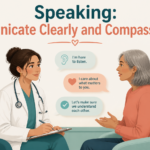



The OET Speaking sub-test assesses spoken communication in a healthcare context. Candidates complete role-play tasks related to their profession. The aim is to communicate effectively with another person—not to deliver a memorized speech.
Focus on the person, not just the task
In a role-play, listen to the other person’s concerns and respond to what they actually say. Use clear, respectful language. Explain information in manageable parts, check understanding, and allow space for questions. A calm tone and active listening can make the conversation easier to follow.
Practise explaining healthcare ideas without unnecessary jargon. If you need to use a technical term, explain it in plain language. Use open questions when you need more information, and summarize key points to make sure you and the other person have understood each other.
Practise role-plays thoughtfully
Before you begin, read the role-play card and identify the main communication goals. During the role-play, try to address those goals naturally while responding to the simulated patient or carer. Afterward, reflect: Did you listen carefully? Was your explanation clear? Did you check the person’s understanding? What could you improve next time?
Record practice conversations, if appropriate, and review them for clarity, pace, and language. Practise with different scenarios so you can adapt rather than rely on fixed scripts. OET recommends preparing across all four sub-tests and learning strategies for timed test conditions. OET preparation guidance
OET Speaking training at Fortwest International
Regular practice can help you become more comfortable communicating under test conditions. Keep your focus on clear, respectful, patient-centred communication—the skills you practise are useful beyond the exam, too.