


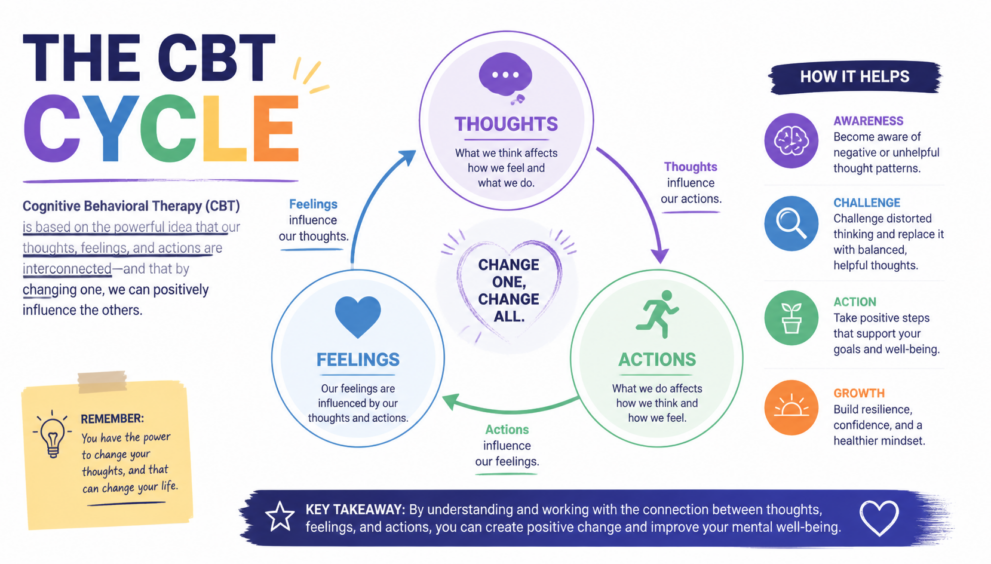
Cognitive Behavioural Therapy (CBT) is a structured form of psychological treatment. It helps people notice how thoughts, feelings, and behaviours can influence one another.
For example, someone who thinks, “I will definitely fail,” before a presentation may feel anxious and avoid practising. Avoidance can then make the presentation feel even harder. In CBT, a therapist may help the person examine that thought, consider other possibilities, and try practical steps such as gradual practice.
CBT is not simply “thinking positively.” It involves learning skills and testing helpful changes in everyday life. The approach may be used for a range of mental health concerns, but the right treatment depends on the individual and should be discussed with a qualified professional. The American Psychological Association describes CBT as a psychological treatment with evidence of effectiveness for several concerns, including anxiety and depression.
Learning how the thought–feeling–behaviour cycle works can help people respond to difficulties with more awareness and choice.