

If you are a nurse preparing for the OET Speaking Test for the UK, one important skill to focus on is asking the patient’s name politely and at the right time. This small but important step helps build trust and shows that you are confident and professional in your communication. In this blog, we’ll explain how to ask the name of a patient, when to do it, and why it is such a key part of your OET Speaking performance.
Why Is Asking the Patient’s Name Important?
In the UK, nurses are expected to treat patients with respect and build a good relationship from the very beginning. Using the patient’s name shows that you care and are paying attention. This is why OET examiners watch closely to see how to ask the name of a patient during the speaking role play. It shows your ability to communicate effectively, just like you would in a real healthcare setting.
When Should You Ask the Patient’s Name?
In OET role plays, the patient’s name will usually be mentioned on the role card. However, you should still ask or confirm the name at the start of the conversation. This helps make your introduction sound natural and professional. Asking the name is especially important when you are meeting the patient for the first time or if the role play does not clearly show your relationship with the patient.
Even during a follow-up visit, confirming the patient’s name is good practice. It shows that you are checking details properly, which is an essential skill for nurses in the UK.
How to Ask the Name of a Patient?
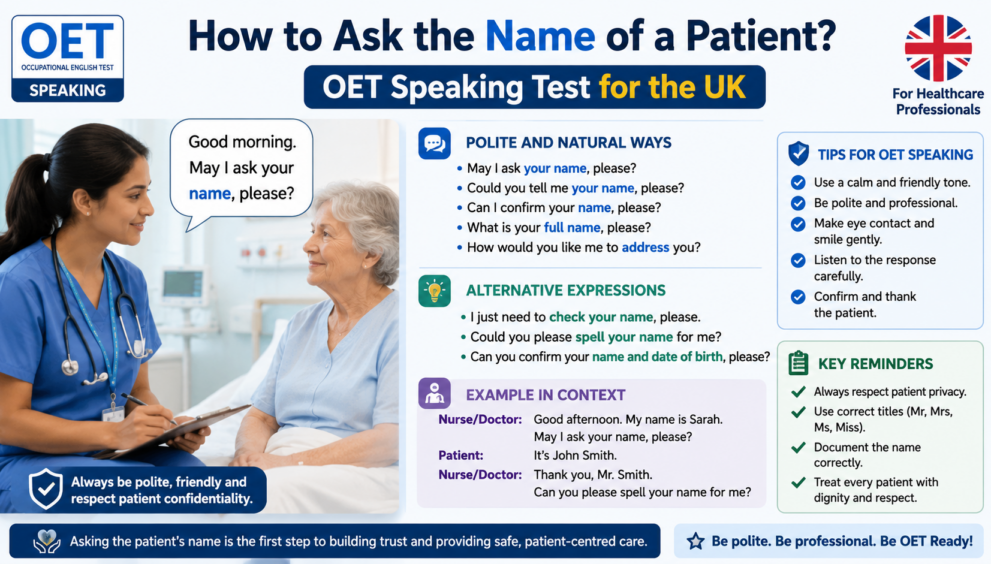
Let’s look at some polite and simple ways to ask:
- “Before we begin, may I know your name, please?”
- “Can I confirm your name, please?”
- “How do you prefer to be addressed?”
- “Is it okay if I call you Mr/Ms [Last Name]?”
- “Am I speaking to Mr John Smith?” (if the name is on the card)
Each of these examples shows how to ask the name of a patient in a respectful and professional way. Practice saying them aloud so that you can use them naturally in your role play.
Tips for UK Nurses on How to Ask the Name of a Patient
- Always start with a friendly greeting, such as: “Good morning, I’m Nurse [Your Name]. I’ll be taking care of you today.”
- Follow with one of the sample phrases to confirm the name.
- Use the patient’s name during the conversation. This helps build connection and shows attentiveness.
- Avoid jumping into the task too quickly. Take a moment to make the patient feel comfortable.
- Practice with different tones so that you sound warm, not robotic or rehearsed.
These steps help show the examiner that you understand how to ask the name of a patient and that you value respectful communication.
What If the Patient Is a Child or Has a Carer?
Sometimes in OET role plays, you may speak to a parent, carer, or family member. Even then, you should still confirm the patient’s name. For example:
- “May I ask your child’s name, please?”
- “Could you confirm your father’s name for me?”
These are still examples of how to ask the name of a patient, adapted to the situation. Being flexible and polite in these situations is an important part of patient-centred communication.
Example Role Play Introduction
Here is how a full, simple introduction could sound in your OET Speaking Test:
“Good afternoon, I’m Nurse Rachel. I’ll be looking after you today. Before we begin, may I confirm your name, please?”
Or:
“Hello, I’m Nurse David. I see that you have an appointment. Can I check your name, please?”
By practicing different ways of how to ask the name of a patient, you will feel more confident and prepared for your exam.
Common Mistakes to Avoid
- Not asking the name at all: This can make your introduction feel incomplete.
- Using the name without confirming it: Even if it is on the card, always check with the patient.
- Sounding unnatural or rushed: Take your time and speak clearly.
Avoiding these mistakes will help you use how to ask the name of a patient in a way that meets OET standards and reflects UK healthcare expectations.
Practice Is the Key
The more you practice, the more confident and natural your communication will become. Try practicing role plays with a tutor or partner, focusing on different ways of how to ask the name of a patient. Get feedback and keep improving your tone and delivery.
Record yourself and listen back. Do you sound polite, calm, and confident? These small details make a big difference in the OET Speaking Test.
Summary
In the OET Speaking Test, especially for nurses aiming to work in the UK, building trust and showing care through communication is essential. Learning how to ask the name of a patient is one of the first and most important steps.
Make it part of your routine for every role play. Use the patient’s name respectfully and regularly throughout the conversation. With regular practice, this skill will become second nature, just as it would in a real hospital or clinic in the UK.
Keep practising—you’ve got this!
Free Consultation: Chat now with Fortuwest International