

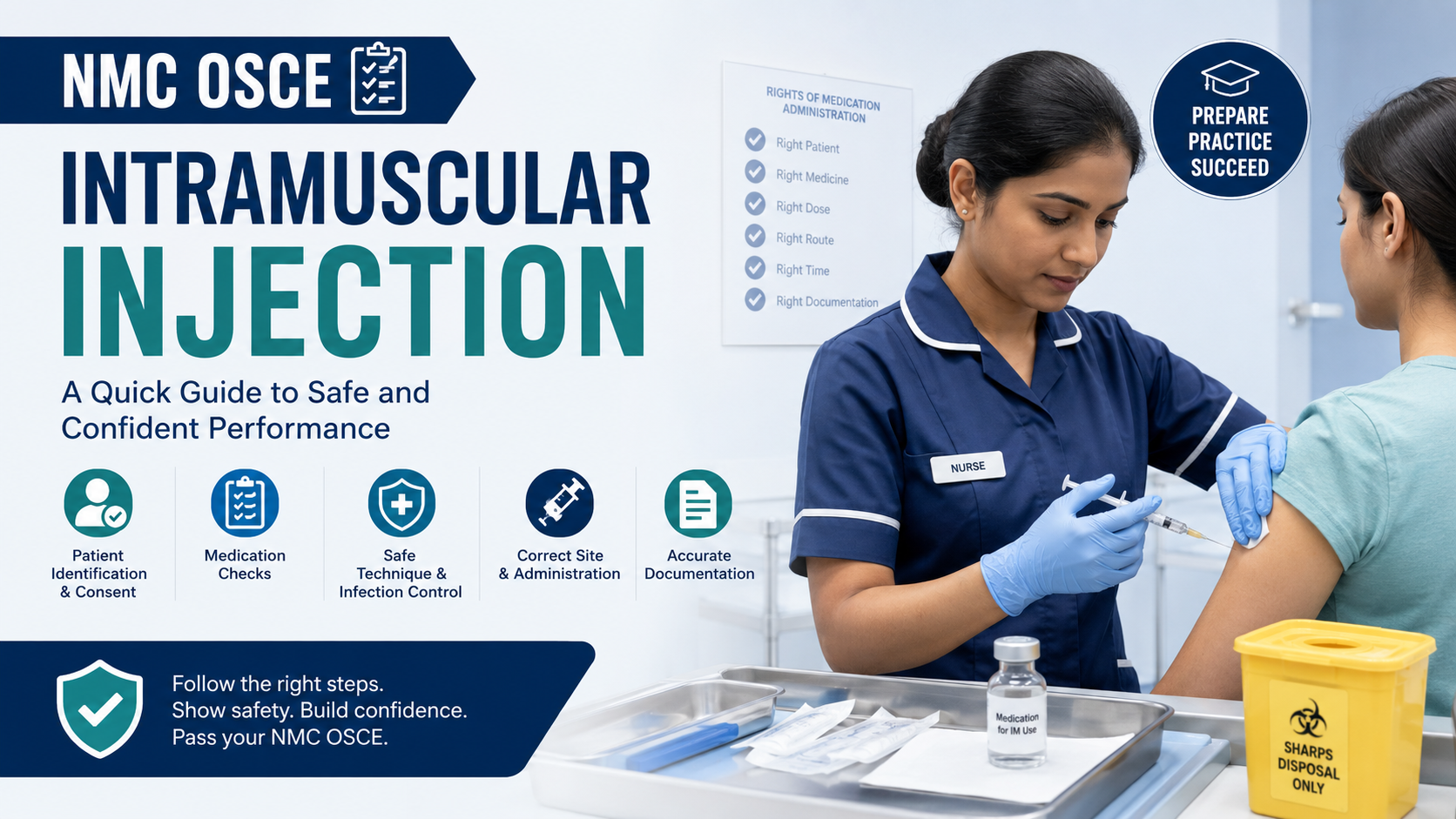
Preparing for the NMC OSCE can be challenging, especially when you need to demonstrate both clinical skills and patient-centred communication within a limited time. The intramuscular (IM) injection station is not simply about giving an injection. It assesses your ability to follow a safe, structured process, including medication checks, infection prevention, consent, correct administration, and documentation.
With the right preparation and regular practice, you can approach this station with confidence.
What Does the NMC OSCE IM Injection Station Assess?
The IM injection station evaluates whether you can administer prescribed medication safely and professionally. Examiners look for a clear sequence from the moment you approach the patient until the procedure is documented.
Your performance should demonstrate:
- Correct patient identification
- Allergy and prescription checks
- Safe medication preparation
- Appropriate infection prevention and ANTT principles
- Clear communication and consent
- Suitable site selection
- Safe sharps disposal
- Accurate documentation and aftercare
The key to success is to stay calm and follow a logical sequence rather than rushing through the procedure.
Essential Checks Before Giving the Injection
Before preparing the medication, begin with patient safety. Perform hand hygiene, introduce yourself, and confirm the patient’s identity using the appropriate identifiers. Check for allergies and carefully review the prescription.
You should also confirm the correct:
- Patient
- Medicine
- Dose
- Route
- Time
- Documentation requirements
Explain the procedure clearly, answer any concerns, and gain consent before proceeding. Remember to maintain the patient’s privacy, dignity, and comfort throughout the station.
Preparing the Medication Safely
Check the medication label, prescribed dose, route, expiry date, and packaging integrity. Prepare the medication using aseptic non-touch technique (ANTT) and avoid contaminating key parts of the equipment.
Draw up the prescribed dose accurately and follow the required safety procedure for changing or disposing of needles. If anything in the prescription or scenario is unclear, do not make assumptions. Clearly verbalise that you would check the information with an appropriate healthcare professional or according to local policy.
Choosing the Right Injection Site
Common intramuscular injection sites include the deltoid, vastus lateralis, and ventrogluteal muscles. The appropriate site depends on the prescribed medication, volume, patient factors, muscle mass, and clinical situation.
In the OSCE, communicate with the patient about suitable site options and consider their preference where appropriate. You should also be able to explain your site selection and identify the relevant anatomical landmarks.
Before administration, inspect the skin and ensure there are no obvious concerns at the selected site.
Administering the Injection
Once all checks are complete, explain to the patient that you are ready to proceed. Maintain dignity while exposing only the necessary area and communicate calmly throughout.
Use the appropriate technique for the prescribed intramuscular injection, following the training and guidance provided for your OSCE preparation. Dispose of the used needle immediately and safely into the sharps bin. After the procedure, check the patient’s comfort and observe for any immediate concerns relevant to the scenario.
Don’t Forget Documentation
Documentation is an essential part of completing the station. Record the medication administration according to the chart and information provided.
Depending on the scenario, this may include:
- Medicine administered
- Dose
- Route
- Date and time
- Injection site, if required
- Your signature or initials
Clear documentation demonstrates accountability and safe professional practice.
Common Mistakes to Avoid
Candidates often lose marks by missing simple safety steps. Common mistakes include forgetting allergy checks, failing to gain consent, rushing medication checks, poor ANTT awareness, weak communication, unsafe sharps disposal, and incomplete documentation.
The best way to avoid these errors is to practise the same structured sequence repeatedly until it becomes natural.
Prepare with Confidence
The strongest OSCE candidates are not necessarily the fastest. They are the candidates who remain organised, communicate clearly, and keep patient safety at the centre of every action.
Fortu West International supports nurses preparing for the NMC OSCE through structured guidance, practical training, mock practice, and feedback. Regular rehearsal can help you improve your medication checks, communication, clinical reasoning, and confidence for the IM injection station.
Master the sequence, practise consistently, and focus on safe, patient-centred care. With proper preparation, the NMC OSCE IM injection station can become a skill you approach with confidence.
Frequently Asked Questions
What is the most important part of the IM injection station?
There is no single step that matters most. Safe performance depends on the complete process, including patient identification, allergy checks, prescription verification, consent, safe preparation, administration, sharps disposal, and documentation.
Which IM injection site should I choose?
The appropriate site depends on the medication, prescribed volume, and patient factors. Common sites include the deltoid, vastus lateralis, and ventrogluteal area. Always select and verbalise a suitable site based on the scenario.
Do I need to document the injection?
Yes. Documentation is an important part of safe medication administration and should be completed according to the chart or scenario provided.
Are gloves and an apron always mandatory?
Personal protective equipment should be used according to the clinical situation, infection prevention principles, and the guidance provided in your OSCE training scenario.
How can I improve my confidence?
Practise the station repeatedly using a clear checklist, perform mock stations under timed conditions, and seek feedback on your technique, communication, and documentation. Structured training from Fortu West International can help you build a reliable and confident approach to the NMC OSCE.