

For nurses planning to build a healthcare career in an English-speaking environment, strong communication skills are essential. The Occupational English Test (OET) is designed specifically around healthcare communication and evaluates the language skills needed in professional situations.
For international nurses, preparing for OET can involve much more than learning general English. Candidates need to become familiar with healthcare vocabulary, understand the test format and practise communicating clearly and accurately.
What Is OET?
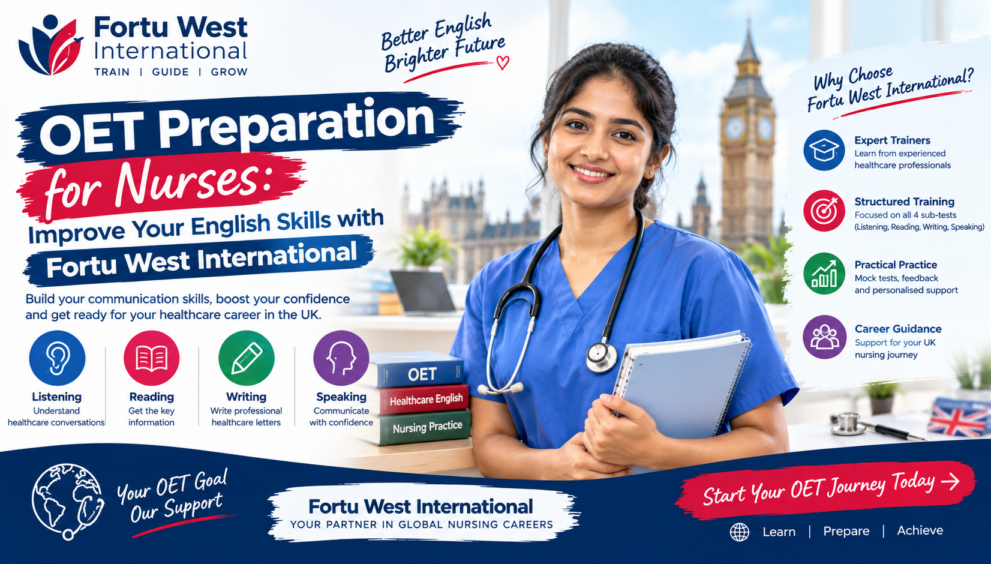
The Occupational English Test assesses English language communication in healthcare-related contexts. The test covers four language skills:
- Listening
- Reading
- Writing
- Speaking
Each component requires a different preparation strategy. Understanding the task types and practising regularly can help candidates become more familiar with the examination.
Why OET Preparation Is Important for Nurses
Healthcare professionals communicate with patients, relatives, colleagues and other members of the healthcare team every day. Clear communication is therefore an important professional skill.
OET preparation can help nurses develop their ability to:
- Understand healthcare-related information
- Identify important details in spoken and written communication
- Write professional healthcare correspondence
- Communicate confidently with patients
- Use appropriate medical vocabulary
- Organise information clearly
- Improve accuracy and fluency
Preparing for the OET Writing Test
The Writing sub-test requires candidates to produce a professional healthcare letter based on information provided in the test.
Preparation should focus on understanding the purpose and audience of the letter, selecting relevant information, organising ideas logically and using an appropriate professional tone.
Regular writing practice followed by feedback can help candidates identify recurring grammar, vocabulary and organisation issues.
Developing Confidence for OET Speaking
The Speaking sub-test uses healthcare-related role-play situations. Candidates need to communicate effectively while demonstrating appropriate interaction with the patient.
Practice can help nurses improve areas such as:
- Introducing themselves professionally
- Explaining healthcare information clearly
- Showing empathy
- Asking appropriate questions
- Responding to concerns
- Checking understanding
- Maintaining a professional conversation
Build Your OET Preparation Strategy
A good preparation plan should include regular practice across all four sub-tests. Instead of concentrating only on areas that feel comfortable, candidates should identify their weaker skills and spend additional time developing them.
Mock tests and feedback can also help candidates become familiar with time management and examination expectations.
Prepare with Fortu West International
Fortu West International provides training and guidance for international healthcare professionals preparing for their professional journey. OET preparation can help candidates strengthen healthcare English while becoming more familiar with the test format.
Candidates should always check the latest OET and relevant professional-registration requirements because score requirements can vary according to the registration pathway and may change over time.
Take the Next Step Towards Your Healthcare Career
Strong English communication can help international nurses feel more prepared for professional environments as well as language testing.
With consistent practice, structured preparation and appropriate guidance, candidates can work towards their OET goals with greater confidence.