

OSCE Preparation Timeline: A 30-Day Study Plan for International Nurses
Preparing for the NMC Objective Structured Clinical Examination (OSCE) can feel overwhelming, especially if you’re balancing work, family responsibilities, or relocating to the UK. The good news is that with a structured study plan, consistent practice, and expert guidance, passing the OSCE becomes an achievable goal.
This 30-day preparation timeline is designed to help international nurses build confidence, strengthen clinical skills, and prepare effectively for every OSCE station.
Why You Need a Structured Study Plan
Many candidates struggle not because they lack nursing knowledge, but because they:
- Study without a clear schedule
- Spend too much time on familiar topics
- Neglect documentation and communication
- Practise inconsistently
- Skip realistic mock examinations
A structured 30-day plan ensures balanced preparation while reducing stress and improving confidence.
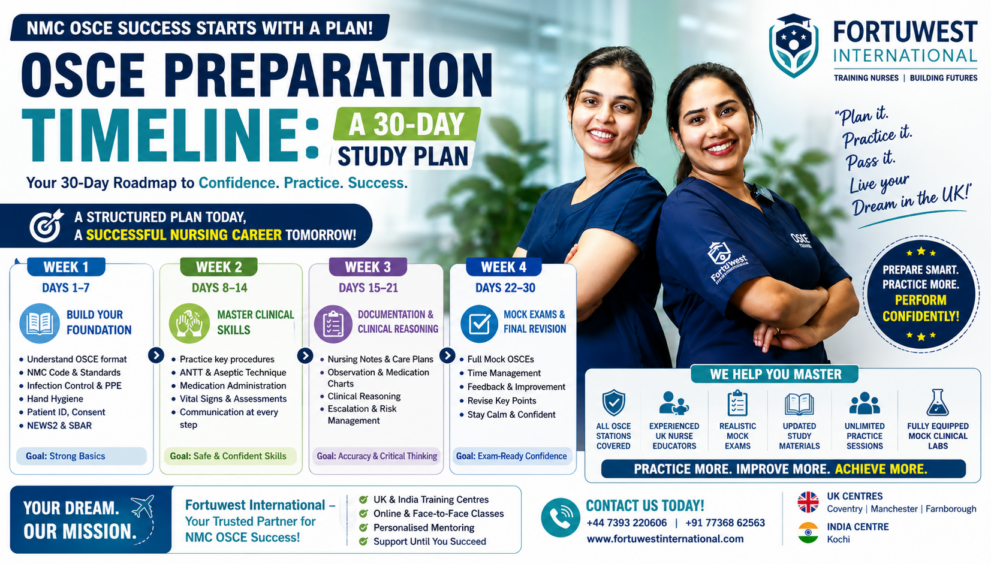
Week 1 (Days 1–7): Build Your Foundation
The first week is about understanding the OSCE and refreshing essential nursing knowledge.
Focus Areas
- Understand the OSCE format
- Learn the assessment criteria
- Review the NMC Code
- Revise infection prevention and control
- Refresh hand hygiene and PPE protocols
- Practise patient identification and consent
- Review NEWS2 and SBAR communication
Daily Goal
Study for 3–4 hours and spend at least one hour practising clinical skills.
Outcome: Develop a strong understanding of OSCE expectations and core NHS standards.
Week 2 (Days 8–14): Master Clinical Skills
The second week focuses on performing procedures safely and confidently.
Practise Common Skills
- Wound assessment and dressing
- Catheter care
- Medication administration
- Vital signs assessment
- Blood glucose monitoring
- Oxygen therapy
- Aseptic Non-Touch Technique (ANTT)
Communication Practice
At every station, practise:
- Introducing yourself
- Confirming patient identity
- Explaining procedures
- Obtaining informed consent
- Providing reassurance
- Closing the consultation professionally
Outcome: Perform clinical procedures smoothly while communicating effectively.
Week 3 (Days 15–21): Documentation and Clinical Reasoning
Documentation is one of the most overlooked aspects of the OSCE.
Practise Writing
- Nursing notes
- Care plans
- Fluid balance charts
- Observation charts
- Medication records
- Escalation documentation
Strengthen Clinical Reasoning
Ask yourself:
- Why am I performing this intervention?
- What risks should I identify?
- What action should I take if the patient’s condition changes?
- When should I escalate concerns?
Outcome: Develop confidence in making safe clinical decisions and completing accurate documentation.
Week 4 (Days 22–30): Mock Exams and Final Revision
This is the most important stage of your preparation.
Complete Full Mock OSCEs
Practise under timed conditions.
Focus on:
- Time management
- Communication
- Documentation
- Patient safety
- Professional behaviour
- Confidence
After each mock exam:
- Review examiner feedback
- Correct mistakes
- Repeat difficult stations
- Practise until your performance becomes consistent
Final Three Days
Avoid learning new material.
Instead:
- Revise key procedures
- Review checklists
- Practise documentation
- Build confidence
- Sleep well and stay hydrated
Outcome: Enter the examination feeling calm, prepared, and confident.
Daily Study Schedule
| Time | Activity |
|---|---|
| 9:00–10:00 AM | Theory Revision |
| 10:15–11:30 AM | Clinical Skills Practice |
| 11:45–12:30 PM | Documentation |
| 2:00–3:00 PM | Communication Practice |
| 3:15–4:30 PM | Mock Scenario |
| Evening | Review Mistakes & Revision |
Essential Topics to Cover
✔ Infection Prevention and Control
✔ ANTT
✔ NEWS2 Assessment
✔ SBAR Communication
✔ Medication Safety
✔ Patient Identification
✔ Documentation
✔ Professional Values
✔ Escalation of Care
✔ Patient-Centred Communication
✔ Clinical Reasoning
✔ Time Management
Common Mistakes to Avoid
- Memorising scripts instead of understanding scenarios
- Forgetting hand hygiene
- Missing patient identity checks
- Poor documentation
- Rushing through procedures
- Ignoring communication marks
- Not verbalising clinical reasoning
- Skipping mock examinations
How Fortuwest International Helps You Succeed
At Fortuwest International, we understand that passing the OSCE requires more than theoretical knowledge—it requires practical confidence, expert mentoring, and repeated practice.
Our comprehensive OSCE preparation programme includes:
- Unlimited practical OSCE training
- Experienced UK nurse educators
- Fully equipped mock clinical laboratories
- Complete coverage of all OSCE stations
- Realistic mock examinations with detailed feedback
- Updated workbooks and study resources
- Small-group practical sessions
- Online and face-to-face training
- Training centres in Kochi, Coventry, Manchester, and Farnborough
- Personalised mentoring to improve confidence and performance
Our goal is not just to help you pass the exam, but to prepare you for a successful nursing career within the NHS.
CLICK HERE TO APPLY FOR UNLIMITED OSCE TRAINING AT THE BEST OSCE TRAINING ACADEMY IN UK
Why Choose Fortuwest International?
✔ Expert trainers with UK clinical experience
✔ Latest NMC OSCE curriculum
✔ Practical, hands-on learning
✔ Flexible online and classroom options
✔ High-quality mock examinations
✔ Individual performance feedback
✔ Supportive learning environment
✔ Proven preparation strategies
Final Thoughts
Passing the NMC OSCE isn’t about studying harder—it’s about studying smarter. A structured 30-day preparation plan allows you to strengthen your clinical skills, improve communication, master documentation, and build the confidence needed to succeed on exam day.
With consistent effort and the right guidance, you can take the next step toward achieving your dream of becoming a registered nurse in the UK.
At Fortuwest International, we’re committed to supporting international nurses throughout every stage of their OSCE journey, helping you prepare with confidence and transition successfully into the NHS.
Frequently Asked Questions (FAQs)
1. Is 30 days enough to prepare for the NMC OSCE?
Yes. With a structured study plan, daily practice, and regular mock exams, 30 days can be sufficient for many candidates, especially those with recent clinical experience.
2. What is the most difficult part of the OSCE?
Many candidates find documentation, time management, and clinical reasoning the most challenging. Regular practice helps overcome these areas.
3. How many hours should I study each day?
Aim for 3–5 focused hours per day, combining theory, practical skills, communication, and documentation.
4. Why are mock OSCE exams important?
Mock exams simulate the real test environment, helping you improve confidence, identify weaknesses, and manage time effectively.
5. How can Fortuwest International support my OSCE preparation?
Fortuwest International offers unlimited practical training, experienced UK educators, realistic mock exams, updated study materials, and personalised mentoring to help you succeed.