


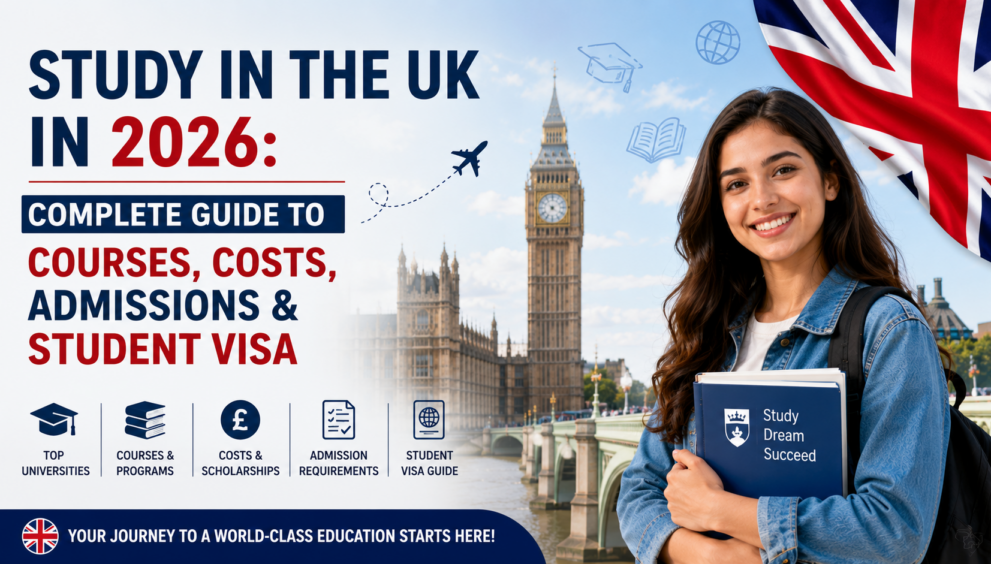
The United Kingdom remains one of the world’s most popular destinations for international students. With globally respected universities, flexible study options, shorter degree programmes, and opportunities to gain international experience, the UK can be an excellent choice for students planning their higher education abroad.
If you are considering studying in the UK, understanding the education system, admission requirements, costs, application deadlines, and visa process can help you prepare with confidence.
Why Study in the UK?
One of the biggest advantages of studying in the UK is the reputation of its universities and education system. UK institutions are known for their teaching, research, and internationally recognised qualifications.
The UK also offers flexible study routes. International students can explore foundation programmes, pathway courses, undergraduate degrees, master’s programmes, and doctoral studies depending on their academic background and career goals.
Another advantage is the relatively short duration of many programmes. A bachelor’s degree can often be completed in three years, while many master’s degrees can be completed in just one year.
Eligible international graduates may also have opportunities to remain in the UK after completing their studies under the Graduate Route, subject to the immigration rules in force at the time of application.
Understanding the UK Education System
Higher education in the UK generally includes:
- Undergraduate degrees: Usually three or more years, depending on the course and location.
- Postgraduate degrees: Often one to two years.
- Doctoral degrees: Commonly three to five years.
Students who need additional academic or English-language preparation can consider foundation programmes, International Year One, English-language programmes, or pre-master’s courses.
These pathways can help international students adapt to the UK education system before progressing to their chosen degree.
What Are the Admission Requirements?
Admission requirements depend on the university and course.
For an undergraduate degree, students may need:
- A-levels or an equivalent qualification
- Proof of English-language proficiency
- Required subjects or course-specific qualifications
- A personal statement and reference, where applicable
For a master’s degree, applicants generally need a relevant bachelor’s degree or equivalent qualification. Some courses may also require work experience, an interview, or an admissions test.
Doctoral applicants normally need a relevant master’s degree or equivalent academic background, along with research experience or a suitable research proposal depending on the programme.
English-language requirements also vary. Universities may accept tests such as IELTS, TOEFL, PTE, Cambridge English, or other approved qualifications.
When Should You Apply?
Planning ahead is essential when applying to UK universities.
For many undergraduate applicants using UCAS, important deadlines generally occur around October, January, and June, depending on the course and application stage.
Competitive programmes such as medicine and dentistry can have earlier deadlines. International students should also allow sufficient time for receiving an offer, obtaining their CAS, preparing their visa application, and making travel arrangements.
Always check the current deadline directly with your chosen university or UCAS before applying.
How Much Does It Cost to Study in the UK?
The cost of studying in the UK varies significantly according to the university, course, and location.
Based on the information provided, international undergraduate tuition fees in early 2026 ranged approximately from £11,400 to £38,000 per academic year, while postgraduate tuition fees ranged from approximately £9,000 to £30,000.
Students also need to budget for accommodation, food, transportation, study materials, healthcare-related costs, and other personal expenses.
Fortunately, international students may be able to reduce their financial burden through scholarships, grants, and bursaries offered by universities and other organisations.
Can International Students Work While Studying?
Eligible international students may be permitted to work while studying in the UK, subject to the conditions of their Student visa and course.
For eligible degree-level students, the standard limit during term time is generally up to 20 hours per week, while some students on courses below degree level may have a lower limit.
Students should always check the work conditions attached to their specific visa before accepting employment.
UK Student Visa Requirements
International students generally need a UK Student visa to study in the UK, while eligible children aged 4 to 17 may require a Child Student visa.
Depending on their circumstances, applicants may need documents such as:
- A valid passport or travel document
- Confirmation of Acceptance for Studies (CAS)
- Evidence of required funds
- Proof of English-language ability, where applicable
- Immigration Health Surcharge payment
- Biometric information
- Tuberculosis test results, where required
- ATAS certificate, where applicable
- Additional documents for sponsored or under-18 students, if required
Visa requirements can change, so applicants should always check the latest official UK government guidance before submitting an application.
Start Your UK Study Journey with Confidence
Studying in the UK can open the door to internationally recognised education, valuable skills, and exciting career opportunities. However, successful study-abroad planning requires careful attention to course selection, admission requirements, finances, and visa documentation.
Fortu West International can support students with UK university application guidance, IELTS training, documentation preparation, and student visa preparation, helping you take each step of your UK study journey with greater confidence.
Start planning early, understand the requirements, and choose the course and university that best match your academic and career goals.