

By Fortuwest International
2 minutes read
The NMC OSCE Implementation Station assesses your ability to administer medications safely while following UK nursing standards. Success depends on demonstrating safe practice, effective communication, and accurate documentation throughout the station.
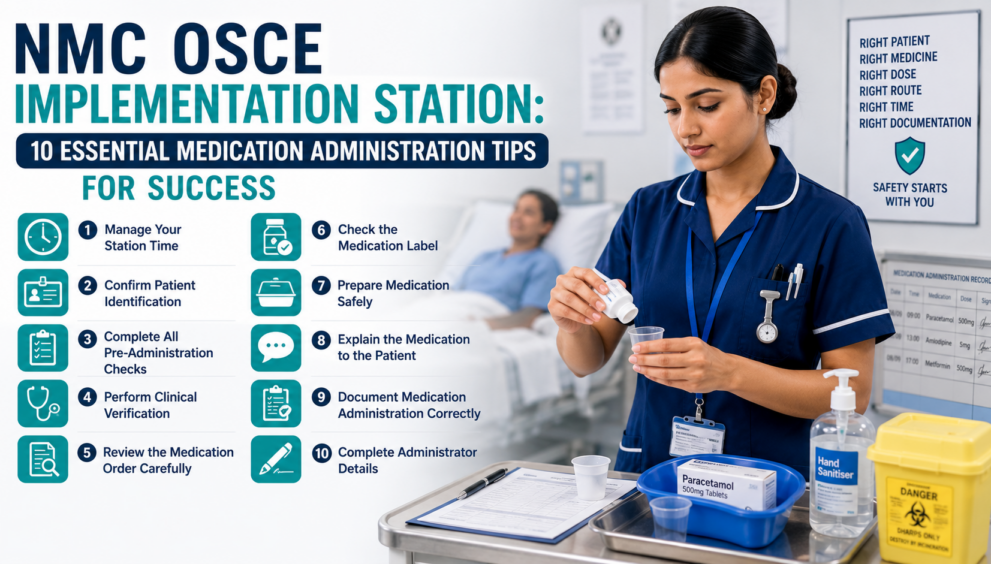
Here are 10 essential things you should never forget during the NMC OSCE Implementation Station.
1. Manage Your Station Time
Practise the Implementation Station using a timer and aim to complete the station within 15 minutes. Try to finish reading and checking the prescription within the first 5 minutes, leaving enough time for medication administration and documentation.
2. Confirm Patient Identification
Always verify the patient’s identity using at least two identifiers, such as:
- Full name
- Date of birth
Also:
- Check the patient’s allergy status and reaction.
- Perform two patient identification and allergy checks—once at the beginning and again immediately before administering medication.
3. Complete All Pre-Administration Checks
Before giving any medication, remember to:
- Ask if the patient has any swallowing difficulties.
- Confirm that previous oral medications have been swallowed.
- Verify the prescription includes the prescriber’s details.
- Ensure the medication is appropriate for the patient’s allergy status.
- Check that at least four hours have passed before administering another dose of medicines such as Paracetamol.
- Confirm whether any stat medication has already been given.
4. Perform Clinical Verification Before Administration
Some medications require additional assessment before administration.
For example:
- Check the blood glucose level before administering antidiabetic medication.
- Check the blood pressure and pulse before giving antihypertensive medication.
- Confirm the patient’s weight before administering Paracetamol, where appropriate.
5. Review the Medication Order Carefully
Read the prescription thoroughly and confirm:
- Correct patient
- Right medication
- Right dose
- Right route
- Right time
- Right frequency
Always ensure the prescription contains the prescriber’s details before proceeding.
6. Check the Medication Label
Before preparing the medication, verify:
- Medication name
- Strength
- Dosage form
- Expiry date
Carefully checking the label helps prevent medication errors.
7. Prepare Medication Safely
Maintain aseptic and safe handling techniques by:
- Using a clean medication tray.
- Pouring tablets from the bottle into the cap, then into the medicine cup without touching them.
- Following infection prevention and medication safety principles throughout preparation.
8. Explain the Medication to the Patient
Communicate clearly with the patient by explaining:
- Why the medication is being given.
- Possible side effects.
- Any special instructions after taking it.
If you are unsure about an indication or side effect, consult the British National Formulary (BNF) and verbalise that you are checking an approved reference.
9. Document Medication Administration Correctly
Accurate documentation is essential.
Remember to:
- Sign only after administering the medication.
- Record omitted medications using the appropriate omission code and signature.
- Complete documentation on the reverse side of the prescription chart where required.
- Ensure all entries are clear and accurate.
10. Complete Administrator Details
Before finishing the station, ensure your administrator details are completed correctly on Page 2 of the medication chart, as required for all medication administrators.
Final Tips
The NMC OSCE Implementation Station is designed to assess your ability to administer medication safely while demonstrating professional communication, clinical reasoning, and accurate documentation. Regular practice, careful prescription checking, effective patient identification, and thorough documentation will significantly improve your confidence and performance during the examination.
At Fortuwest International, we support international nurses with expert preparation for the NMC OSCE, NMC CBT, OET, and every stage of the UK nursing registration journey. Our experienced trainers provide practical guidance, mock examinations, and personalised support to help you achieve success with confidence.