

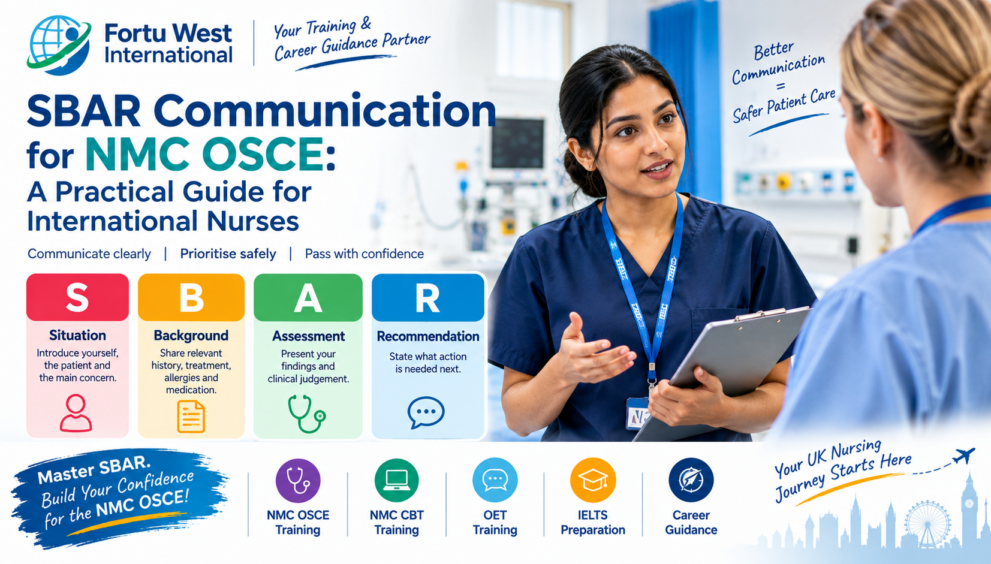
For international nurses preparing for UK registration, effective clinical communication is an important part of NMC OSCE preparation. One communication framework that can help nurses organise patient information clearly is SBAR: Situation, Background, Assessment and Recommendation.
In an NMC OSCE evaluation station, candidates may need to communicate information about a patient, explain important findings and identify appropriate next steps. Using a structured approach can help you communicate relevant information clearly while demonstrating professional nursing practice.
What Does SBAR Mean?
SBAR is a structured method of communicating important clinical information between healthcare professionals.
The four elements are:
- S – Situation
- B – Background
- A – Assessment
- R – Recommendation
The purpose is not to provide every detail in the patient’s record. Instead, focus on information that is relevant to the patient’s current condition and the action required.
1. Situation: Explain the Current Concern
The Situation introduces the patient and explains why you are communicating with another healthcare professional.
Depending on the scenario, you may need to include:
- Your name and professional role
- Patient identification details
- Reason for admission or current care
- The patient’s immediate concern
- The reason for the handover or escalation
Avoid beginning with a long medical history. State the main concern clearly so the listener understands why the communication is taking place.
For example, rather than saying that the patient is simply “not well”, explain the specific concern identified during your assessment.
2. Background: Provide Relevant Context
The Background gives the information needed to understand the patient’s current situation.
Relevant information may include:
- Current diagnosis and treatment
- Relevant medical history
- Allergies and reactions
- Regular medications
- Recent procedures or consultations
- Relevant social information
- Factors affecting activities of daily living
Not every detail in the case notes needs to be included. Select information that has a connection to the current concern.
3. Assessment: Present Your Findings
The Assessment section allows you to communicate what you have observed and assessed.
This may include:
- Latest vital signs
- Changes compared with previous observations
- Relevant assessment charts
- Pain assessment and pain score
- Medication administered
- Nutritional assessment where appropriate
- Relevant clinical findings
- Health education provided
- Referrals or consultations already arranged
Do not simply list numbers or findings. Where appropriate, explain why a particular finding is important and communicate any concern about deterioration.
4. Recommendation: Explain the Next Step
The Recommendation is where you communicate what you think needs to happen next.
Depending on the scenario, this may involve:
- Requesting a medical review
- Continuing observations
- Reviewing pain management
- Reviewing medication
- Assessing nutritional needs
- Escalating concerns about deterioration
- Requesting further assessment
- Continuing appropriate nursing interventions
Your recommendation should match the patient’s situation. If you identify a significant concern, communicate it clearly and escalate it appropriately.
Avoid Common SBAR Mistakes
Candidates can sometimes make their handover less effective by:
- Giving excessive background information
- Repeating the same information
- Missing abnormal observations
- Failing to explain the main concern
- Listing findings without showing their relevance
- Giving an unclear recommendation
- Using informal communication
- Forgetting to communicate important allergies or medication
- Focusing on minor details instead of priority concerns
Remember that SBAR is a communication framework, not a speech that must be memorised word for word.
How to Practise SBAR for NMC OSCE
Regular practice can help you become more comfortable with structured handovers.
Try practising with different clinical scenarios and focus on identifying:
What is happening now?
What background information matters?
What have I assessed?
What needs to happen next?
You can also practise speaking within a set time, record your practice and review whether your communication is clear, relevant and logically organised.
SBAR and Professional Nursing Communication
The value of SBAR extends beyond the examination. Nurses regularly communicate with other healthcare professionals about patients, changes in condition, treatment and ongoing care.
Learning to communicate important information in a structured way can therefore support both OSCE preparation and professional development.
Fortu West International: Training and Career Guidance for International Nurses
At Fortu West International, we support international nurses and students through structured training and career guidance designed around their UK education and healthcare goals. Our training support includes NMC OSCE preparation, NMC CBT preparation, OET preparation and IELTS preparation, along with guidance for nurses planning their professional journey in the UK.
Our NMC OSCE training focuses on practical clinical skills, communication, station-based preparation and exam-oriented practice. Our CBT training helps candidates prepare for the theoretical and professional knowledge required for the NMC registration process, while OET training supports healthcare professionals in developing the English language skills needed for professional communication. Through career guidance and training support, Fortu West International helps international nurses understand their preparation pathway and approach their UK career plans with greater confidence.
Final Takeaway
A successful SBAR handover should be clear, relevant, organised and patient-focused. Start with the Situation, provide the necessary Background, communicate your Assessment and finish with an appropriate Recommendation.
For international nurses preparing for the NMC OSCE, practising this structure regularly can help make clinical communication more organised and confident.