


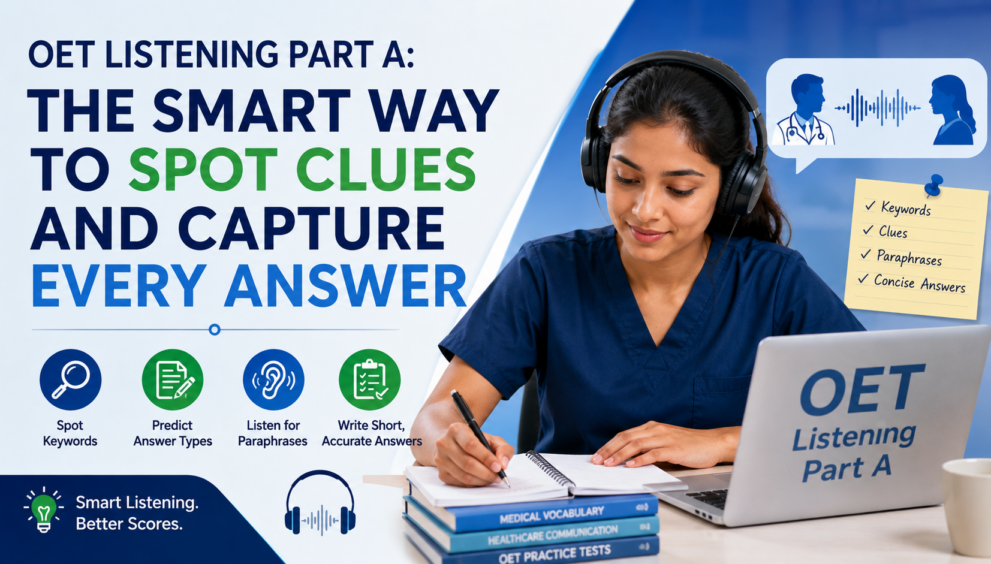
OET Listening Part A can feel challenging—not necessarily because every conversation is difficult to understand, but because the information moves quickly. You hear each consultation only once, so knowing where to focus your attention can make a real difference.
A common mistake is trying to understand and remember every single word. Instead, successful candidates learn to identify keywords, predict answer types, and recognise paraphrased information.
Here is a practical approach to help you listen with greater purpose.
Start with the Notes, Not the Audio
Before the recording begins, use the preparation time carefully. Read the headings and incomplete notes to understand what information you need to listen for.
Look for important clue words such as:
- Symptoms
- Body parts
- Medications
- Investigations
- Treatments
- Time expressions
- Measurements
- Action words
- Negative words
For example:
History of ______ allergies
The key clue is allergies. This tells you to listen for the substance or item connected with the patient’s allergy.
Similarly:
Symptoms started ______ ago
The words symptoms, started, and ago suggest that you need to listen for a period of time or duration.
These keywords work like signposts, helping you focus on the relevant part of the conversation.
Predict the Type of Answer
You do not need to predict the exact words you will hear. Instead, ask yourself:
What type of information belongs in this gap?
The answer may be:
- A medication
- A number
- A duration
- A body part
- A frequency
- A reason
- A healthcare professional
- An investigation or test
For example:
Currently taking ______
You should expect the name of a medicine or treatment.
If the note says:
Pain score: ______ /10
you should be ready to listen for a number.
This simple habit prepares your brain before the relevant information appears in the recording.
Listen for Meaning, Not Just Matching Words
One of the most important skills in OET Listening Part A is recognising paraphrasing.
The speaker may not use exactly the same words that appear in the notes.
For example:
Question:
Symptoms began ______.
Audio:
“The pain first started about three days ago.”
The wording is different, but began and first started communicate the same idea.
If you wait to hear the exact word from the question, you could miss the answer. Instead, listen for the meaning behind the clue words.
With regular practice, you will begin to recognise common paraphrases more quickly.
Keep Your Answer Short and Accurate
Another important skill is knowing when to stop writing.
If the speaker says:
“three weeks”
write three weeks, rather than adding unnecessary words.
If the answer is:
“left ankle”
there is usually no need to write an entire sentence when only those two words complete the notes correctly.
Always follow the instructions and word limit provided in the task. A correct answer should fit naturally into the note and contain only the information required.
Use Grammar as a Quick Check
After writing an answer, quickly consider whether it fits the sentence grammatically and logically.
For example:
Family history of ______
The answer should complete the note naturally. If you write a long sentence that does not fit the structure, you may need to reconsider what information was actually required.
This quick check can help prevent mistakes caused by writing too much or misunderstanding the question.
Avoid These Common Mistakes
OET candidates can lose marks when they:
- Try to listen to every word equally.
- Ignore headings and section topics.
- Search for exact words instead of recognising paraphrases.
- Predict an exact answer instead of an answer type.
- Write unnecessary extra information.
- Add details based on their medical knowledge rather than the recording.
- Misspell important words.
The goal is not to understand every detail perfectly. The goal is to identify the information needed for each gap.
A Simple Practice Method
After completing a Listening Part A practice test, spend time reviewing your performance.
Try this approach:
- Identify the keywords in each question.
- Check what type of answer each gap required.
- Review how the recording expressed the same idea.
- Notice paraphrases and alternative wording.
- Check whether your answer fits the grammar of the notes.
- Repeat difficult sections to improve recognition and accuracy.
This type of focused practice can help you become more familiar with consultation language, different accents, and common OET question patterns.
Listen with Purpose
OET Listening Part A is not simply about having a good memory. It is about directing your attention to the right information at the right time.
By identifying keywords, predicting answer types, recognising paraphrases, and writing concise answers, you can approach the test in a more organised and confident way.
The next time you practise, don’t try to catch every word.
Focus on the clues. Follow the meaning. Capture the answer.
Need Guidance for Your OET Journey?
Fortu West International provides guidance for students and healthcare professionals planning their international education and career journey. Get the right support, prepare with confidence, and take your next step towards your professional goals.
Start preparing today—your international future begins with the right guidance.