

Fortuwest International Blog | CBT Exam Overview
By Fortuwest International
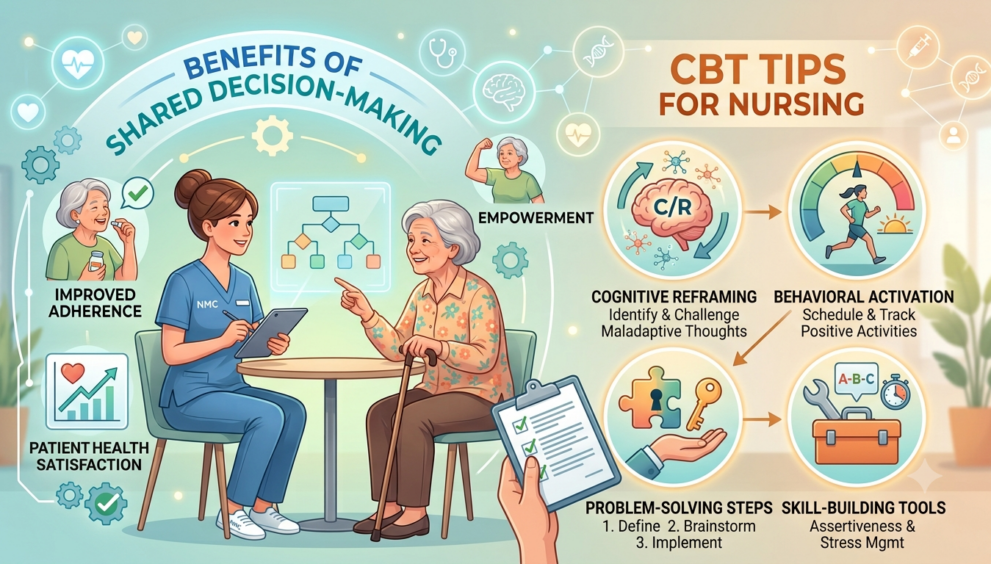
Shared decision-making in nursing is an essential part of safe, respectful, and person-centred care. In UK healthcare settings, nurses are expected to involve patients in choices about their treatment, daily care, and ongoing support. This approach is not only good professional practice, but it is also closely linked to communication, consent, dignity, and the core values of the Nursing and Midwifery Council (NMC).
For international nurses preparing for the NMC CBT, deeply understanding shared decision-making is critical to unlocking complex, scenario-based questions and demonstrating sound professional judgement.
What Is Shared Decision-Making in Nursing?
Shared decision-making means the nurse and patient work together as equal partners. The nurse brings clinical knowledge, safety awareness, and evidence-based guidelines. The patient brings personal preferences, values, goals, beliefs, and lived experience.
Rather than telling a patient what will happen, the nurse explains choices, checks understanding, explores concerns, and helps them make an informed decision whenever they have the mental capacity to do so. This applies across all NHS settings—from busy acute wards to community and mental health services.
Core Principles of Shared Decision-Making
- Transparent Communication: Provide clear information regarding the purpose of care, available choices, benefits, risks, and what happens if no action is taken.
- Tailored Delivery: Adapt communication to the patient’s explicit needs using plain English, trained interpreters, or the “teach-back” method.
- Exploration of Values: Actively uncover what matters most to the patient (e.g., daily routines, cultural practices, or specific fears).
- Legal & Professional Boundaries: Always operate within safety boundaries. If a patient lacks capacity or choice introduces immediate safeguarding risks, follow structured escalation pathways.
Clinical Examples in Everyday Practice
- Pain Management: A postoperative patient refuses strong analgesia, fearing opioid-induced drowsiness. Instead of forcing compliance, the nurse collaborates to adjust medication timing or introduce antiemetics, balancing comfort with early mobility goals.
- Discharge Planning: A patient fit for discharge expresses subtle anxiety about managing at home. By exploring this, the nurse uncovers a fear of falling on the stairs, leading to a proactive referral to occupational therapy rather than a rushed, unsafe discharge.
- Diabetes Education: Instead of handing over a rigid meal plan, the nurse reviews the patient’s specific cultural diet and daily work shifts to co-create a realistic, sustainable lifestyle routine.
Overcoming Common Barriers
- Time Constraints: While a busy shift makes long conversations difficult, even brief interactions can be collaborative if you ask targeted, open-ended questions.
- Health Literacy: Some patients may politely nod without understanding. Gently invite collaboration by asking: “Would you like me to explain the options so we can decide on the best path together?”
- Conflicting Preferences: If a patient’s preferences conflict with safe care, shared decision-making does not mean giving in to an unsafe request. It means establishing the root cause of their refusal, outlining clinical risks clearly, and involving the multidisciplinary team (MDT).
Shared Decision-Making and the NMC CBT
The CBT frequently tests this principle through clinical scenarios involving consent, refusal of treatment, and communication barriers. The safest answer option is almost always the one rooted in collaborative care.
CBT Tips for Exam Success
- Prioritise Exploration Over Enforcement: If a patient with capacity refuses a critical intervention, the correct initial action is always to explore their reasoning and assess their understanding of the risks.
- Avoid Assumptions: Do not assume a refusing patient is simply being non-compliant. Look for answers that involve clarifying, listening, and confirming comprehension.
- Think Documentation and Escalation: When an autonomous decision involves clinical risk or explicit refusal, the nurse’s subsequent steps must involve meticulous documentation and formal escalation to senior clinicians.
- Anchor to the NMC Code: When stuck between options, ask yourself: Which of these answers best prioritises the person, practises effectively, preserves safety, and promotes trust?
How Fortuwest International Ready-Fits Your Preparation
Navigating the cultural and professional expectations of UK nursing practice can feel overwhelming for international candidates. At Fortuwest International, we design our CBT preparation programs to bridge this exact gap.
We don’t just help you memorise facts; we train you to think like a UK registered nurse. Our mock exams, study guides, and interactive question banks are fully updated to reflect the latest 2026 NMC standards. With Fortuwest International, you will build the clinical judgment and testing confidence needed to pass your CBT on the very first try.
Why Wait? Just Fortuwest It!
Free Consultation – Chat now with a Fortuwest International expert.
FAQ: Shared Decision-Making in Nursing
Q: Is shared decision-making the same as informed consent?
A: Not quite. Informed consent is a legal requirement focusing on a patient giving permission for a specific procedure. Shared decision-making is the broader, collaborative journey of discussion and joint care planning that happens before consent is reached.
Q: What should I do in a CBT scenario if a patient completely refuses care?
A: Remain non-judgmental. Assess their capacity, discuss the risks of refusal honestly using accessible language, explore alternative options, document the conversation thoroughly, and escalate to the senior charge nurse or medical team.
Q: Can family members make decisions for a competent patient?
A: No. In UK practice, if a patient has mental capacity, their choices are central. Family members can be included in discussions only if the patient gives explicit permission.
Read our detailed blog – “Avoid These Common Pitfalls After the UK NMC CBT in 2026” – to ensure your overseas registration journey stays completely on track.
Lorem ipsum dolor sit amet, consectetur adipiscing elit. Ut elit tellus, luctus nec ullamcorper mattis, pulvinar dapibus leo.