

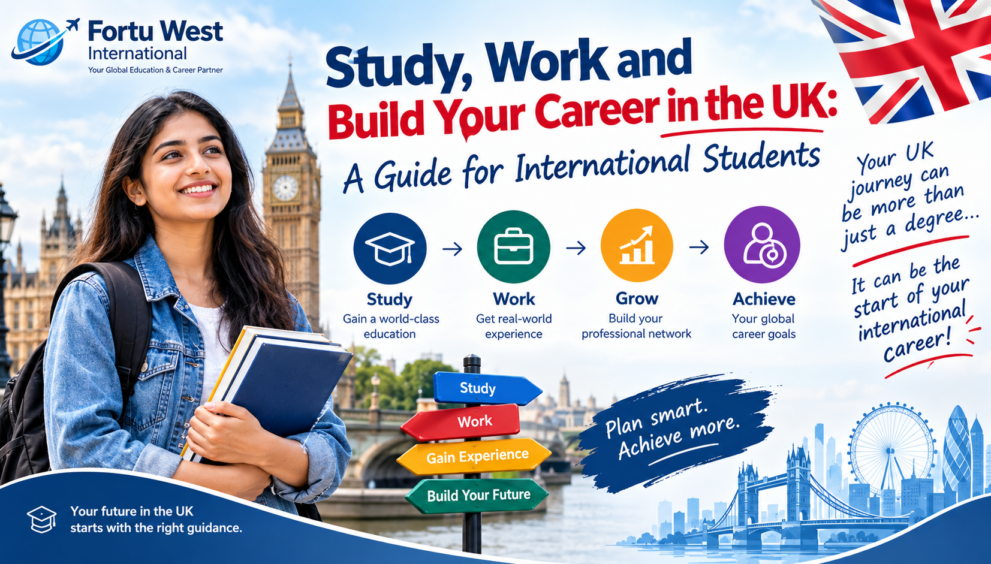
The UK is a popular destination for international students because it combines globally recognised universities with opportunities to gain valuable professional experience. For many students, studying in the UK is not only about earning a degree—it can also be an opportunity to develop practical skills, build professional connections, and prepare for a future career.
International students may be able to work part-time during their studies, complete internships or placements as part of their course, and explore post-study work options after graduation. Understanding the relevant visa conditions and planning ahead can help students make the most of their UK education journey.
Important: Immigration rules can change. The information below is intended as general guidance and should not be treated as individual immigration advice. Always check the latest information on GOV.UK and seek professional advice if you need guidance about your specific circumstances.
Can International Students Work While Studying in the UK?
Students studying in the UK on a Student visa may have permission to work, but the amount and type of work permitted depend on factors such as the level of the course, the student’s sponsor, and whether the course is in or out of term time.
For eligible degree-level students, the standard limit is generally up to 20 hours per week during term time. Students on certain below-degree-level courses may have a 10-hour weekly limit.
During permitted university holidays, eligible students may generally work full-time. Students should always check the conditions attached to their own immigration permission and the guidance provided by their university.
Key points to remember
- Eligible degree-level students may generally work up to 20 hours per week during term time.
- Certain below-degree-level students may have a 10-hour weekly limit.
- Full-time work may be possible during permitted vacation periods.
- Course-related placements can have separate rules.
- Student visa holders cannot undertake certain types of employment, including self-employment and some permanent full-time roles.
Understanding these restrictions before accepting a job is important. Working outside the conditions of your visa can create serious immigration problems.
Part-Time Work: More Than Just Extra Income
A part-time job can provide more than financial support. It can help students develop transferable skills that employers value.
For example, working in retail, hospitality, administration, customer service, or another permitted role can help students develop:
- Communication skills
- Teamwork
- Time management
- Customer-service skills
- Problem-solving
- Workplace confidence
- Professional responsibility
However, studies should remain the priority. Students should choose working hours that do not interfere with their academic commitments.
Internships Can Give You a Career Head Start
An internship can help international students understand how their chosen industry works in practice.
Depending on the programme and employer, internships may take place during university holidays or at other points during a student’s course. Some degree programmes also incorporate work experience directly into the curriculum.
A relevant internship can help you connect academic knowledge with workplace situations while giving you experience to discuss during future job interviews.
Students should also check whether an internship is part of their course and whether specific rules apply to the placement.
Consider a Course With a Work Placement
Some UK universities offer courses that include an additional work placement or placement year.
These programmes allow students to spend part of their degree gaining experience in an organisation related to their field of study. A placement can help students understand workplace expectations and develop industry-specific skills before graduation.
Before selecting such a course, check:
- Whether the placement is guaranteed or competitive
- Whether additional fees apply
- How the placement affects the course duration
- Whether the placement must be related to your subject
- What immigration conditions apply
A well-chosen placement can become an important addition to your CV.
What Happens After Graduation?
For eligible international graduates, the Graduate Route can provide an opportunity to remain in the UK after completing an eligible course and work or look for employment.
The duration depends on the qualification and the date of application. Under the rules applying from 1 January 2027, graduates of bachelor’s and master’s degrees generally receive 18 months, while graduates with a PhD or other doctoral qualification generally receive three years.
Because immigration policies can change, students should check the latest GOV.UK requirements before applying.
Making the Most of the Graduate Route
The post-study period can be an important stage in your professional development.
Graduates can use this time to:
- Search for suitable employment
- Gain UK work experience
- Build professional networks
- Develop industry-specific skills
- Explore career opportunities
- Prepare for a longer-term immigration route where eligible
The Graduate Route is not normally extendable. Graduates who want to remain in the UK after it ends may need to qualify for another immigration route, depending on their circumstances.
What About Healthcare Professionals?
International students and professionals planning careers in healthcare may have additional options.
Eligible healthcare professionals may be able to apply for the Health and Care Worker visa when they have the required qualifications, an eligible job, and meet the relevant requirements.
For nurses and other healthcare professionals, professional registration and English-language requirements may also be important parts of the journey.
Understanding these requirements early can help students plan their education and career pathway more effectively.
How to Prepare for Your UK Career Journey
Your career planning should begin before graduation rather than after it.
1. Choose your course carefully
Consider the course content, university, placement opportunities, career outcomes, and total cost before applying.
2. Build experience while studying
Where permitted, consider internships, placements, volunteering, or part-time employment that can help you develop transferable skills.
3. Create a strong CV
Keep your CV updated with academic achievements, projects, internships, work experience, and relevant skills.
4. Develop professional connections
University events, careers services, internships, professional organisations, and networking opportunities can help you meet people in your chosen industry.
5. Research your post-study options early
Do not wait until your visa is close to expiry. Understand the available routes and requirements well in advance.
Start Planning Your UK Education and Career With Fortu West International
Choosing the right university and course is an important first step toward building a successful international career. At Fortu West International, students can receive guidance as they explore UK education opportunities, course options, English-language preparation, and career-focused pathways.
Whether your goal is to study, gain professional experience, or develop an international career, careful planning can help you make informed decisions at every stage.
Final Thoughts
Studying in the UK can offer international students more than an internationally recognised qualification. With appropriate planning, students may also gain valuable workplace experience, develop professional skills, and explore opportunities after graduation.
The key is to understand your visa conditions, prioritise your studies, gain relevant experience where permitted, and begin planning your career early.