

Planning to Work as a Nurse in the UK? Your Journey Starts with the CBT.
For internationally educated nurses, securing a nursing career in the United Kingdom is an exciting milestone. One of the first and most important steps in this journey is passing the Computer Based Test (CBT), a key component of the UK Nursing and Midwifery Council (NMC) registration process.
If you’re wondering what the CBT is, why it’s important, how to prepare, and what to expect on exam day, this guide covers everything you need to know.
What is the CBT Exam?
The Computer Based Test (CBT) is an online examination conducted by the Nursing and Midwifery Council (NMC), UK. It assesses whether internationally qualified nurses possess the theoretical knowledge required to practice safely and effectively within the UK healthcare system.
The CBT is the first examination in the NMC Test of Competence (ToC). After successfully passing the CBT and meeting all other NMC requirements, candidates proceed to the Objective Structured Clinical Examination (OSCE), which evaluates practical clinical skills.
Why is the CBT Important?
Passing the CBT demonstrates that you understand:
- Safe and effective nursing practice
- UK healthcare standards
- Professional ethics and accountability
- Clinical decision-making
- Patient safety principles
- Evidence-based nursing practice
Without passing the CBT, candidates cannot proceed to the OSCE or complete their NMC registration.
Who Needs to Take the CBT?
The CBT is required for:
- Internationally educated nurses
- Internationally educated midwives
- Nursing associates applying for UK registration
Whether you’re applying from India, the Philippines, Nigeria, Ghana, Kenya, Nepal, or any other country, the CBT is an essential step toward becoming a registered nurse in the UK.
CBT Exam Structure
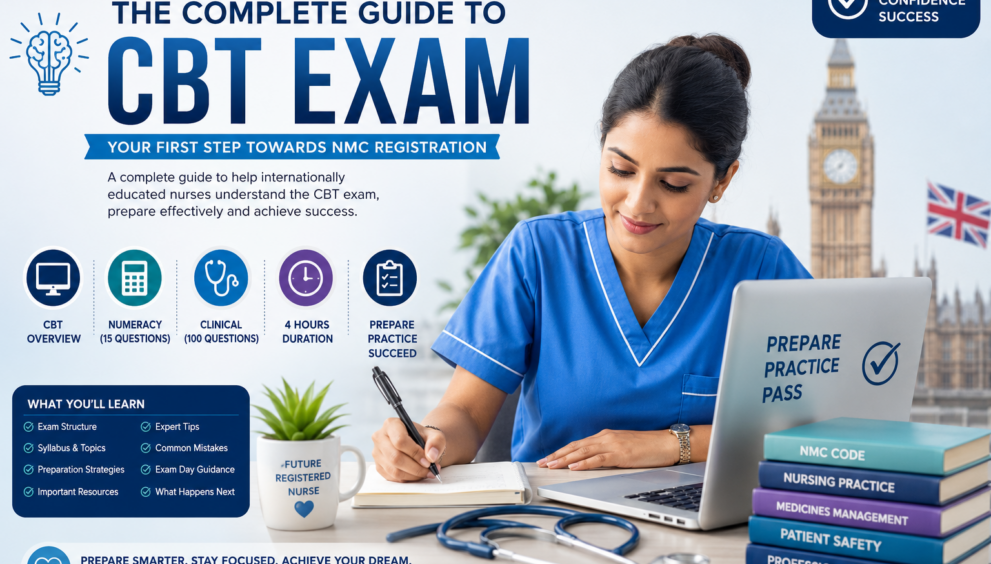
The nursing CBT consists of 115 multiple-choice questions divided into two sections:
Part A: Numeracy (15 Questions)
This section evaluates your ability to perform calculations commonly used in clinical practice.
Topics include:
- Drug dosage calculations
- IV infusion rates
- Unit conversions
- Fluid balance
- Medication administration
Part B: Clinical (100 Questions)
This section assesses your nursing knowledge across a broad range of topics, including:
- Adult Nursing
- Child Health
- Mental Health
- Learning Disabilities
- Infection Prevention and Control
- Safeguarding
- Communication Skills
- Professional Values
- Medicines Management
- Health Promotion
- Clinical Governance
- Patient Safety
- Leadership and Teamwork
- Evidence-Based Practice
CBT Exam Duration
Candidates are given approximately 4 hours to complete the examination.
Most candidates finish well within the allotted time, but careful time management is essential.
Where Can You Take the CBT?
The CBT is conducted at authorized Pearson VUE Test Centres located across the world.
Many cities in India offer CBT testing centres, making the examination easily accessible.
CBT Scoring
The NMC does not publicly disclose the exact passing score.
Instead, the passing standard is determined through professional standard-setting methods to ensure that successful candidates demonstrate the minimum competence required for safe nursing practice in the UK.
Topics You Must Prepare
A strong preparation plan should cover:
Professional Values
- NMC Code
- Accountability
- Confidentiality
- Consent
- Equality and Diversity
- Duty of Care
Communication Skills
- Therapeutic communication
- Documentation
- Record keeping
- Patient education
- Cultural sensitivity
Nursing Practice
- Infection control
- Aseptic technique
- Wound care
- Pain management
- Patient assessment
- Nutrition and hydration
Medicines Management
- Medication safety
- High-alert medicines
- Controlled drugs
- Drug calculations
- Medication errors
Patient Safety
- Risk assessment
- Incident reporting
- Falls prevention
- Pressure ulcer prevention
- Safe discharge planning
Leadership
- Delegation
- Supervision
- Teamwork
- Conflict resolution
- Clinical decision making
How to Prepare for the CBT
1. Understand the Exam Blueprint
Begin by reviewing the official NMC CBT blueprint to understand the exam domains and competencies.
2. Study Daily
Create a study schedule that includes:
- 2–3 hours of focused learning
- Revision sessions
- Practice questions
- Mock examinations
Consistency is more effective than occasional long study sessions.
3. Practice Numeracy
Drug calculations require speed and accuracy.
Practice:
- Dosage calculations
- Infusion calculations
- Weight conversions
- Unit conversions
until they become second nature.
4. Take Mock Tests
Mock exams help you:
- Improve time management
- Identify weak areas
- Build confidence
- Become familiar with exam-style questions
- FORTUWEST international offers you a structured and perfectly curated CBT mock sessions their institutes in UK for just £99 only. Learn more about Fortuwest CBT training
5. Learn UK Nursing Guidelines
Understanding UK nursing standards is crucial.
Focus on:
- Patient-centred care
- NHS values
- NMC Code
- Infection prevention protocols
- Safeguarding policies
Common Mistakes Candidates Make
Many candidates fail due to avoidable mistakes, including:
- Memorizing without understanding concepts
- Ignoring the NMC Code
- Neglecting numeracy practice
- Poor time management
- Skipping mock exams
- Rushing through questions
- Not reading scenarios carefully
Avoiding these pitfalls can significantly improve your chances of success.
Exam Day Tips
Before the exam:
- Arrive early at the test centre.
- Carry valid identification.
- Stay calm and confident.
- Read every question carefully.
- Eliminate obviously incorrect options.
- Manage your time wisely.
- Review your answers if time permits.
Remember, confidence comes from thorough preparation.
What Happens After Passing the CBT?
Once you pass the CBT, you can continue your NMC registration process by:
- Completing document verification
- Meeting English language requirements (if applicable)
- Obtaining eligibility from the NMC
- Preparing for and passing the OSCE
- Receiving your NMC registration and beginning your nursing career in the UK
Why Professional CBT Training Matters
While self-study is possible, structured CBT training can provide:
- Expert guidance
- Updated study materials
- Comprehensive topic coverage
- Live classes
- Mock examinations
- One-to-one mentoring
- Performance feedback
- Exam strategies and tips
A well-designed training program helps candidates prepare more efficiently and confidently.
Final Thoughts
The CBT is more than just an examination—it’s your gateway to a rewarding nursing career in the United Kingdom. With a clear understanding of the exam format, consistent preparation, regular practice, and the right guidance, you can approach the test with confidence and significantly improve your chances of success.
Stay focused, believe in your abilities, and remember that every hour you invest in preparation brings you one step closer to achieving your dream of becoming a UK Registered Nurse.
Good luck on your CBT journey!