


About a 5-minute read
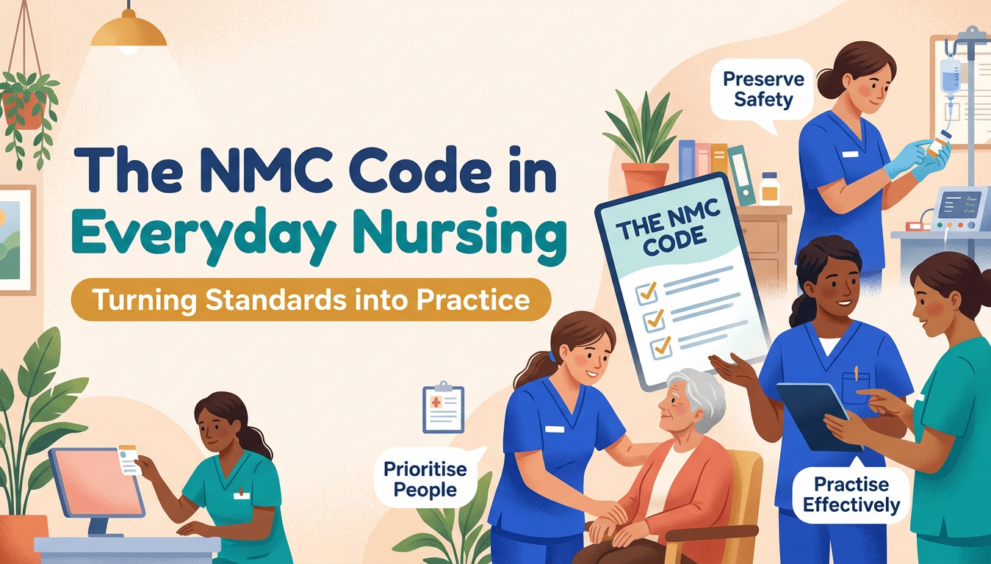
The Nursing and Midwifery Council’s Code is more than a document to read during training. It sets the professional standards that nurses, midwives, and nursing associates must uphold to remain registered. The Code is organised around four themes: prioritise people, practise effectively, preserve safety, and promote professionalism and trust. These principles apply across different roles and care settings. Understanding them can help students and registered professionals connect professional standards with the decisions they make every day.
Prioritise people
Putting people first means treating each person with dignity, listening to what matters to them, and involving them in decisions about their care. It also means recognising that every person has their own needs, preferences, beliefs, and concerns.
A practical example might be explaining a procedure in clear language, checking that the person has had a chance to ask questions, and considering what support they need to understand their options. If someone has communication needs, take reasonable steps to help them express themselves and understand the information being shared.
Respect also means protecting privacy. Before discussing personal information, consider who needs to know it and whether the conversation can take place in a private setting. Small choices—such as asking permission before entering a space or explaining what will happen next—can help people feel respected and involved.
Practise effectively
Effective practice depends on clear communication, accurate records, and working well with colleagues. Care often involves a team, so relevant information needs to be shared promptly and respectfully.
For example, during a handover, focus on the details colleagues need to continue care safely. Keep documentation factual, timely, and clear. If you are unsure about a task or have not been trained to do it, ask for guidance and work within your knowledge and competence. Seeking support is part of safe professional practice.
Learning is part of this theme too. Nurses need to maintain and develop the knowledge and skills required for their role. Students can make the most of placement by setting learning goals, asking appropriate questions, and using feedback to decide what to practise next.
Preserve safety
Safety includes recognising risks and taking appropriate action. This can mean following infection prevention guidance, checking important information, reporting an error, or raising a concern if care could be unsafe.
Speaking up can feel difficult, especially for a student or someone new to a team. However, concerns should not be ignored because of embarrassment or fear of inconveniencing others. The NMC Code says professionals should raise concerns about patient or public safety through appropriate channels. If you are unsure what to do, follow local policies and seek advice from a senior colleague. Read the Code online.
Safety also includes being honest when things go wrong. Promptly sharing a concern can help the team understand what happened, respond to the person affected, and reduce the chance of a similar problem happening again.
Promote professionalism and trust
Professionalism is shown through honesty, respect, and responsible conduct. Protect confidential information, maintain appropriate boundaries, and be open when something goes wrong. Trust is built through consistent actions, including listening carefully, keeping promises where possible, and treating people fairly.
Professional conduct applies online as well as at work. Think carefully before sharing workplace information or photographs, and never post details that could identify a person receiving care. Even without a name, a combination of details might reveal someone’s identity.
Use the Code as a reflection tool
Students can use the four themes to reflect on placement experiences: How did I involve the person? What did I communicate? What affected safety? What would I do differently next time? Registered professionals can use the Code to guide reflection and ongoing development.
The NMC regulates nurses and midwives across the UK and nursing associates in England. Its overview of who it regulates explains the regulator’s role. The Code offers a shared reference point for professional decisions, helping connect everyday actions with the safe, respectful care people should receive.