

The NMC OSCE tests more than your ability to perform a clinical procedure. In the intramuscular (IM) injection station, you are expected to demonstrate safe practice, effective communication, professional judgement, and accurate documentation.
For many nurses, the injection itself is familiar. The real challenge is remembering every safety step while communicating confidently and working within the structure of the OSCE. A clear method can make the station feel much more manageable.
Think Beyond the Injection
A successful IM injection station begins before the medication is prepared. Examiners are looking for evidence that you can protect the patient throughout the entire process.
Start by introducing yourself and confirming the patient’s identity using the appropriate identifiers. Check for allergies, review the prescription, and ensure that the medication details are correct. You should also explain the procedure clearly and gain the patient’s consent.
These early actions demonstrate that patient safety comes before the technical procedure.
Follow a Clear Safety Routine
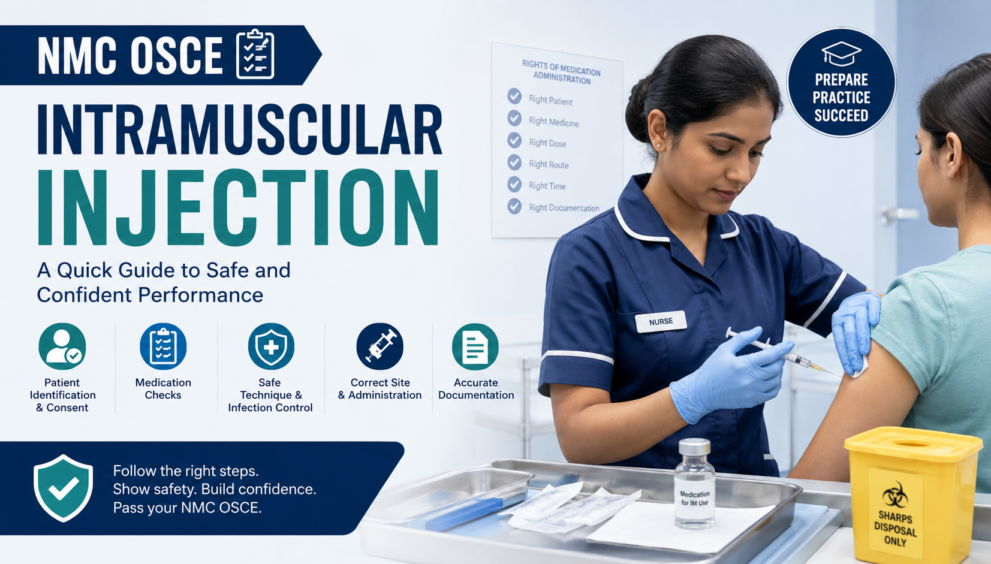
One of the best ways to prepare for this station is to create a mental routine that you follow every time. Your sequence should include:
- Hand hygiene and infection prevention
- Patient identification
- Allergy assessment
- Prescription and medication checks
- Consent and clear explanation
- Safe preparation using ANTT principles
- Appropriate injection site selection
- Safe administration
- Immediate sharps disposal
- Patient aftercare and documentation
Practising this same sequence repeatedly can help reduce hesitation during the exam.
Site Selection Requires Clinical Thinking
Choosing an injection site is not simply about remembering anatomy. You should consider the medication, prescribed volume, patient’s condition, muscle mass, and the clinical scenario.
Common IM injection sites include the deltoid, vastus lateralis, and ventrogluteal areas. During the OSCE, clearly explain your reasoning and communicate with the patient about suitable options and preferences where appropriate.
Before administering the medication, inspect the selected area and maintain the patient’s privacy and dignity.
Communication Can Strengthen Your Performance
Good communication should continue throughout the station. Tell the patient what you are doing, use simple and professional language, and give them an opportunity to ask questions.
Before proceeding, make sure the patient is comfortable and ready. During the procedure, remain calm and observant. Once the medication has been administered, check how the patient is feeling and provide appropriate aftercare.
A candidate who combines safe clinical practice with compassionate communication is demonstrating the professional standards expected in nursing practice.
Complete the Procedure Properly
The station does not end when the injection is given. Safe disposal of equipment and accurate documentation are equally important.
Dispose of sharps immediately according to safe practice. Then complete the medication documentation based on the information provided in the scenario. This may include the medication name, dose, route, date, time, administration site where required, and your signature or initials.
Always remember that documentation is part of patient safety and professional accountability.
Build Confidence Through Practice
The most effective preparation is structured and repeated practice. Begin by learning the sequence slowly. Then practise each part aloud until your explanations feel natural.
Once you are comfortable, try completing the full station under timed conditions. Ask a friend, colleague, or trainer to observe your performance and identify missed steps.
Useful practice methods include:
- Mock OSCE sessions
- Medication-check rehearsals
- Injection site landmarking practice
- Communication drills
- Documentation exercises
- Feedback and repeated correction
The goal is not to memorise a robotic script. Instead, you should understand the reason behind each action so that you can respond confidently to different OSCE scenarios.
Prepare for Your OSCE with Fortu West International
Fortu West International supports nurses preparing for important professional examinations through structured guidance and practical learning. Focused preparation can help you develop a reliable approach to clinical stations, strengthen your communication, and improve your confidence under exam conditions.
The NMC OSCE IM injection station becomes easier when you break it into a clear sequence: check, prepare, communicate, administer, dispose, document, and review.
By practising safely and consistently, you can turn a challenging station into an opportunity to demonstrate your knowledge, clinical skills, and readiness for professional nursing practice.
Frequently Asked Questions
What should I focus on most during the IM injection station?
Focus on the complete process rather than only the injection technique. Patient identification, allergy checks, medication safety, consent, infection prevention, communication, administration, sharps disposal, and documentation all matter.
How can I avoid forgetting steps?
Use the same structured sequence during every practice session. Repetition helps the process become more natural and reduces the chance of missing important safety actions.
Is communication important in this station?
Yes. Clear, respectful, and patient-centred communication should continue before, during, and after the procedure.
How can I prepare more effectively?
Combine individual skill practice with full mock stations. Regular feedback and repeated rehearsal can help you identify weaknesses and build confidence before the exam.
With the right preparation and a safety-focused approach, you can perform the NMC OSCE IM injection station with greater confidence and professionalism.